ChatGPT took the world by storm as a viral sensation when it launched in November 2022. Developed by research company Anthropic, ChatGPT demonstrates remarkable human-like conversational abilities powered by a cutting-edge large language model architecture called Generative Pre-trained Transformer (GPT).
Now in OpenAI DevDay 2023, ChatGPT announced and aims to put its advanced AI capabilities directly in the hands of users with a new feature – the ability to build customized GPT chatbots tailored to specific needs. With ChatGPT’s user-friendly Custom GPTs builder, anyone can create their own intelligent assistant to automate tasks and enhance productivity.
The meteoric rise of ChatGPT has ushered in a new era of conversational AI. Behind ChatGPT is a cutting-edge natural language processing technology called Generative Pre-trained Transformer (GPT). GPT models are trained on vast datasets to generate human-like text responses to natural language prompts.
That’s all set to change with OpenAI’s new GPT builder. The GPT builder allows ChatGPT Plus and Enterprise subscribers to create specialized GPT models called Custom Assistants. This guide will explore how custom GPTs can transform how individuals and businesses leverage AI.

Democratizing AI Creation with the GPT Builder
The GPT builder completely democratizes AI development. Now anyone can build their own intelligent assistant by simply chatting with the GPT builder bot.
No coding or technical skills are required. The builder guides you through creating a custom GPT via natural language conversations. Explain what you want your GPT to do, provide examples, and the builder handles the technical details behind the scenes.
With the GPT builder, customizing AI is as easy as describing your needs to a friend. This represents a paradigm shift, allowing non-developers to take advantage of advanced AI.
Main Features of the Custom GPT
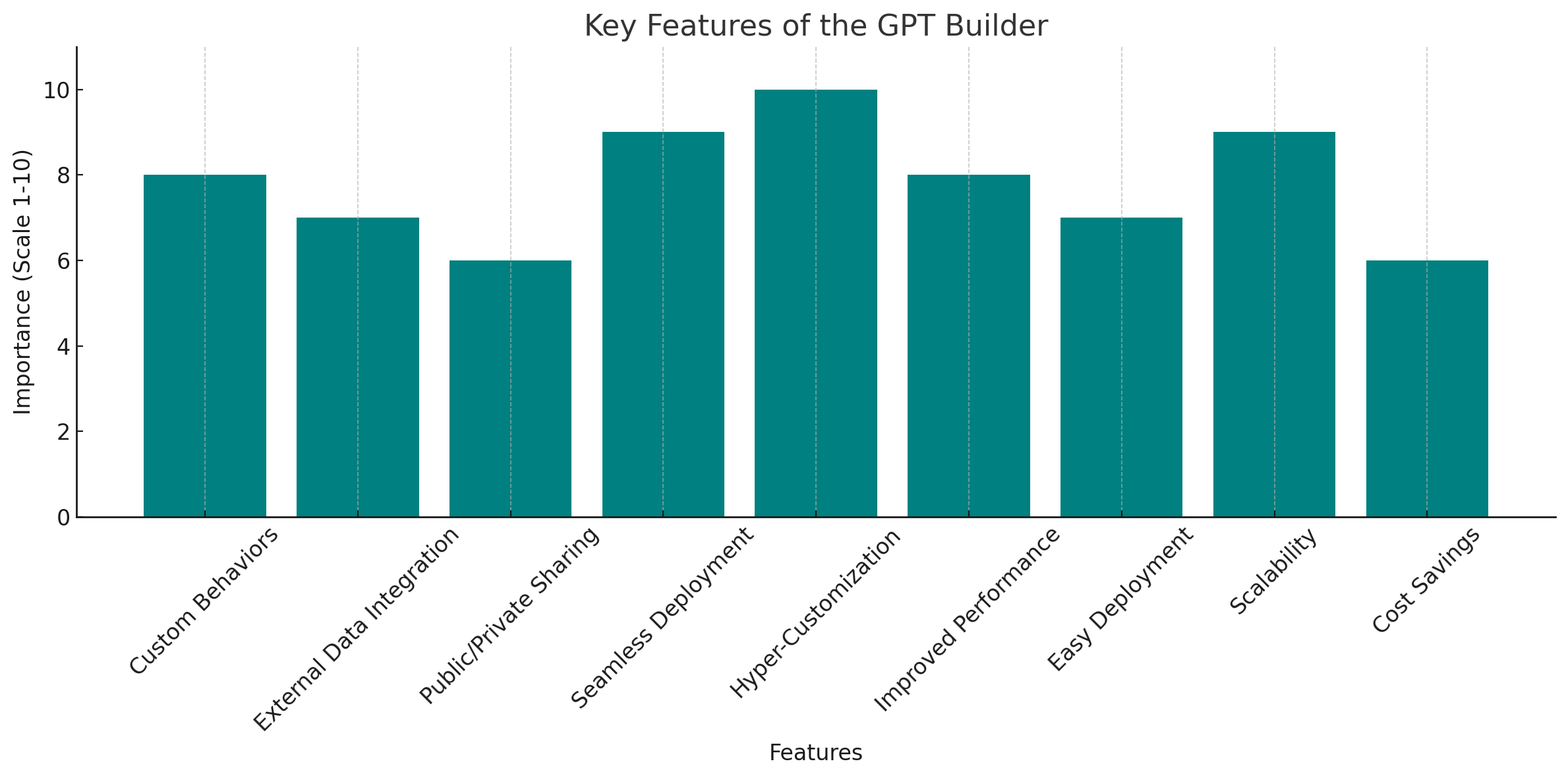
Custom GPTs allow users to create tailored versions of ChatGPT for specific use cases. Key features include the ability to customize behaviors, integrate external data sources, and share creations publicly or privately.
The GPT builder allows ChatGPT subscribers on Plus and Enterprise plans to develop specialized GPT chatbots called Custom Assistants. Key features include:
Create GPTs for Specific Use Cases
GPTs empower users to build specialized chatbots optimized for particular tasks or domains. For example, a teacher could create an education-focused GPT, while a marketer may build one for generating campaign ideas. The possibilities are endless.
Rather than being constrained by ChatGPT’s general knowledge, users can define a custom GPT for niche tasks and domains. Explain exactly what you want it to do in plain English.
Simple and Intuitive Build Process
Building custom GPTs is designed to be straightforward, with users providing instructions and information through natural conversation. No coding or technical skills are required to create highly-customized chatbots.
No coding or technical skills are required. The builder guides you through creating a GPT via conversational prompts and examples.
Flexible Sharing and Access
Users can keep GPTs private, share them publicly, or grant access at an organizational level. This flexibility allows both individual and enterprise use cases.
Control who can interact with your custom assistant. Keep it private, share it with specific people, or make it public.
Seamless Integration and Deployment
GPTs integrate external data through custom actions, connecting them directly to databases, emails, e-commerce systems, and more. This enables seamless deployment across organizations.
Easily integrate GPTs into apps and business workflows using the API. Deploy directly to teams and organizations.
Use Cases and Examples of GPTs

Potential use cases include customer service, content creation, data analysis, and process automation. Specific examples include a marketing assistant GPT or one optimized for coding tasks.
Let’s explore some real-world examples of custom GPTs powering workflows:
Customer Support
A retail company creates a customer service GPT by uploading its product catalogs, FAQs, and support documentation. The GPT can now efficiently handle common queries and quickly locate order information.
A customized GPT could provide personalized and consistent customer service, drawing on relevant knowledge bases and resources.
Recruiting
A recruiting firm builds a GPT to screen and evaluate resumes based on required skills and qualifications. The GPT improves consistency in the screening process.
Content Creation
GPTs can generate tailored content like social media posts, product descriptions and more based on an organization’s brand and guidelines.
A marketing agency develops a GPT to generate SEO-optimized blog post outlines on trending topics. This boosts their content creation productivity.
Data Analysis
By connecting to data sources like CSVs, GPTs can run analyses, summarize insights, and answer natural language questions about the data.
A healthcare company trains a GPT on their patient records database. Doctors can now ask the GPT for insights about symptoms and conditions to assist with diagnoses.
Programming Tutor
An edtech startup creates a GPT programmed with a computer science curriculum to provide personalized coding lessons and feedback for students.
The possibilities are endless when you combine customization with ChatGPT’s powerful foundations.
Domain-Specific Expertise
Develop GPTs with deep knowledge in areas like law, finance, healthcare, engineering, etc.
Personal Assistant
Individuals can create a GPT personalized for tasks like scheduling, research, and providing recommendations based on preferences.
Transforming Businesses with Custom GPTs
For businesses, custom GPTs open up game-changing possibilities to increase productivity, efficiency, and customer satisfaction.
Streamlining Workflows
Replace repetitive manual processes with intelligent automation using custom GPTs. For example, build an AI assistant to handle data entry, document analysis, appointment scheduling, and more.
Boosting Customer Service
Improve support and issue resolution by creating customer service GPTs. Quickly find account details, diagnose problems, recommend solutions, and answer common questions.
Generating Personalized Content
Automate content creation for different formats and contexts with a tailored GPT. From social media posts to blog articles, generate drafts to review and edit.
Extracting Insights from Data
Unlock valuable insights from reports, dashboards, and other business data with a custom analytics GPT. Spot trends, surface key takeaways, and get predictive forecasts.
Building Intranet Knowledge Bases
Construct an AI knowledge base for your organization’s internal procedures, resources, and documentation. Enable employees to easily find answers.
The possibilities are truly endless when you can customize AI to align with your business needs and systems.
Benefits of Building Custom GPTs
Specialized GPTs deliver a wealth of advantages:
Hyper-Customization
GPTs can be meticulously tailored for specific use cases to enhance relevance. General knowledge gives way to niche expertise.
Improved Performance
Narrowing an AI’s focus area leads to more accurate responses aligned with custom instructions and data.
Easy Deployment
Eliminate technical hurdles to rapidly deploy AI. ChatGPT’s user-friendly builder allows anyone to put AI to work.
Scalability
Efficiently scale AI across departments and teams. Share GPTs while maintaining data privacy and security.
Cost Savings
Automate manual work to boost productivity. Reduce customer support costs.
Revenue Opportunities
Monetize valuable GPTs through OpenAI’s upcoming GPT Store.
Specialized GPTs make AI accessible and beneficial for organizations of all sizes.
Step-by-Step Guide to Building Your Own GPT
Here is a step-by-step guide to creating a custom GPT in 5 minutes using OpenAI’s new GPT builder:
1. Log into ChatGPT
Go to chat.openai.com and log in with your ChatGPT Plus or Enterprise account.
2. Click “Create a GPT”
In the sidebar, click “Explore” and then “Create a GPT” to start making your custom assistant.
3. Chat with the GPT Builder
The builder will guide you through creating your GPT. Please explain what you want it to do, give it a name and description, and provide any special instructions.
4. Configure Advanced Settings
Click “Configure” to customize things like:
- Knowledge files to train your GPT
- Capabilities like web browsing
- Custom actions using APIs
5. Save and Share
Choose who can access the GPT – just you, anyone with a link, or the public. Click save.
Deploy
Give your GPT a name and description. Make it public or private.
That’s the basics! With just a few minutes of chatting and configuration, you can build a tailored GPT to automate tasks and enhance productivity. Check out the video for a full walkthrough and template. Let me know if you have any other questions.
Integrate via API
Incorporate your GPT into apps, sites, and workflows.
Tips for Optimizing GPT Performance
Follow these best practices to build effective Custom Assistants:
- Provide clear, detailed instructions upfront.
- Train iteratively with feedback.
- Use well-structured examples.
- Check for biases and logical failures.
- Retrain regularly as knowledge evolves.
- Evaluate with objective metrics.
- Combine models into ensembles.
The Future of AI is Customizable
ChatGPT’s GPT builder opens up thrilling possibilities for customized AI assistants. As the technology improves, GPTs will keep getting smarter, faster, and more flexible.
For businesses, tailored GPTs provide solutions that turbocharge productivity and efficiency. Individuals can automate tedious tasks and unlock newfound creativity.
OpenAI is accelerating progress towards artificial general intelligence by putting advanced AI capabilities directly in the hands of users. With the right approach focused on empowering human potential, this technological revolution could profoundly enhance our lives.
However, thoughtfully addressing risks around misuse will be critical as AI capabilities grow more sophisticated. OpenAI’s cautious rollout of incremental features provides a responsible pathway to realizing benefits while prioritizing safety.
The age of accessible artificial intelligence is just getting started. Custom GPTs mark an exciting milestone, but even more transformative capabilities will likely await. The only limit is human imagination.
Frequently Asked Questions about GPTs
Here are answers to some common questions about ChatGPT’s new custom GPT capabilities:
What are GPTs?
GPTs are customized versions of ChatGPT that users can create for specific purposes and domains using the GPT builder.
How do I create a custom GPT?
Use the GPT builder to simply chat with the bot and explain what you want your GPT to do. Provide examples and instructions. No coding is required.
What can I customize in a GPT?
Name, description, profile image, knowledge sources, abilities, instructions that guide behavior, sharing permissions, and more.
What knowledge sources can I add?
You can upload documents and data files for your GPT to reference. This contextual knowledge improves performance.
What abilities can GPTs have?
Options include web browsing, image generation, data analysis, and custom capabilities via API integrations.
Can I sell my custom GPT?
Yes, OpenAI plans to launch a GPT Store to allow creators to share and monetize innovative GPTs.
How do I share my GPT?
You control who can access your GPT. Keep private, share by link, allow anyone, or publish to GPT Store.
How much does creating a GPT cost?
It’s free to build GPTs, but you need a paid ChatGPT Plus ($20/month) or Enterprise subscription.
What are some example use cases for custom GPTs?
Customer service, content creation, data analysis, recruiting, programming tutors, personal assistants, and much more.
How can Custom GPTs be used to improve public transportation schedules and communication?
Custom GPTs can analyze data from a variety of sources to create accurate and efficient embark bus schedules leveraging tech. By utilizing these advanced technologies, public transportation systems can better communicate with passengers, optimize routes, and improve overall user experience.
Conclusion
ChatGPT’s new GPT builder empowers anyone to easily create specialized AI assistants tailored to their needs. With custom GPTs, repetitive tasks can be automated, workflows enhanced, and new possibilities unlocked.
While still an early-stage capability but very powerful and time saving, the democratization of AI creation will have profound impacts across industries and society. But thoughtfully guiding the technology’s progress will be critical.
With responsible development focused on empowering human potential, custom GPTs could help usher in an era of accelerated innovation. The future is full of possibilities when AI is customizable by all.