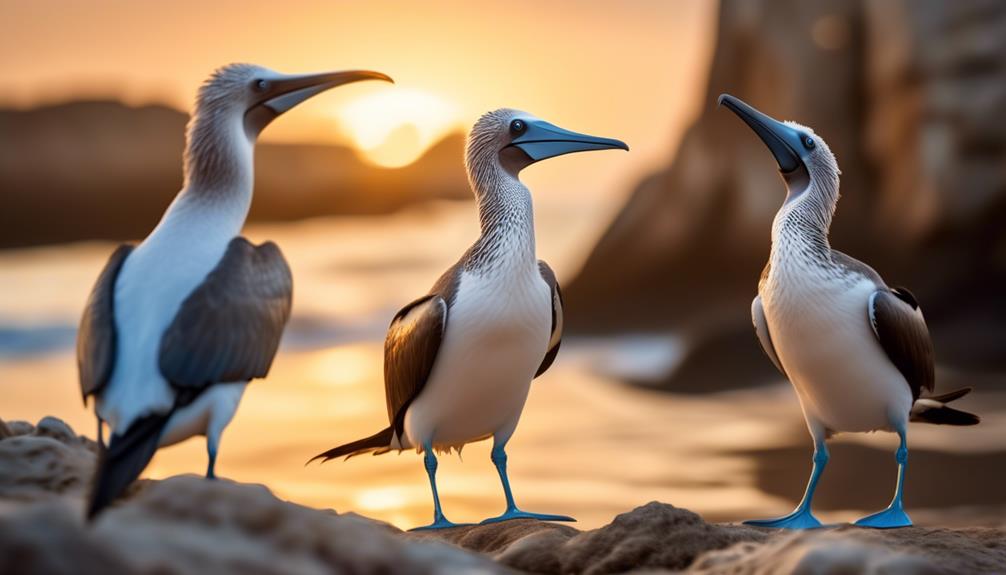

In the gentle world of avian artistry, you'll find that capturing the essence of boobies through your lens is as much about understanding their subtle nuances as it is about shutter speeds and apertures. As a professional, you're aware that bird photography is a practice of patience and precision, where each image can contribute to the broader strokes of conservation and knowledge.
You'll need to equip yourself with more than just a camera to truly encapsulate the vibrant life of these seabirds. Consider composition and the interplay of natural lighting—these are your brushes and palette. But remember, the canvas of the wild is ever-changing, and to immortalize the fleeting grace of boobies in flight, you must be as adaptable as the subjects you seek to frame.
Stay tuned to uncover the symphony of skills that elevate a simple snapshot to a masterpiece, a silent narrative waiting to unfold before your very eyes.
Understanding Booby Behavior
To understand booby behavior, observe their dynamic courtship displays, such as sky-pointing and bill-tapping, which are crucial for attracting mates. You'll see them performing head-shaking as well, each movement a part of their elaborate mating dance. These behaviors aren't just for show; they're vital communication methods to signal readiness and suitability for partnership.
You'll also want to pay attention to their feeding habits. Boobies are masterful hunters, plunge diving with pinpoint accuracy to snag fish. This not only showcases their agility but also their survival skills, a trait potential mates find appealing.
Remember, boobies are highly territorial. You'll notice their stern displays and interactions, as they defend their space with vigor. This is especially evident during the breeding season when competition is fierce and real estate is at a premium.
Watch their nesting behaviors closely. From the careful construction of nests to the diligent care of their eggs and chicks, these rituals give you a window into the tender side of their otherwise fierce demeanor.
Lastly, don't overlook how boobies interact with other species, like frigatebirds and gulls. These encounters can range from peaceful coexistence to outright hostility, providing a complete picture of their complex social behavior.
Essential Photography Gear
Having observed the captivating behaviors of boobies, you'll need the right photography gear to capture their essence sharply and vividly. A high-quality camera with interchangeable lenses is crucial, allowing you to switch between wide-angle and telephoto options to get the perfect shot, whether it's a close-up or a landscape with your subject in its natural habitat.
Here's a rundown of the gear you'll want to have on hand:
- Camera and Lenses
- *DSLR or Mirrorless*: Choose based on your preference for size and features.
- *Lenses*: A variety of focal lengths, including a telephoto lens for distant birds.
- Stabilization and Protection
- *Tripod*: A sturdy one is essential for sharp images during long exposures.
- *Camera Bag/Backpack*: Look for one with padded compartments to keep your gear safe on the go.
- Accessories for Quality and Endurance
- *Filters*: Polarizers and neutral density filters to manage light and color.
- *Maintenance and Storage*: Lens cleaning kits, extra memory cards, and spare batteries are must-haves.
Composition Techniques
As you frame your subject, consider how elements like trees or architecture can enhance your shot.
Be mindful of the background; it should complement, not distract from the bird you're capturing.
Lastly, play with lighting and shadows to add mood and depth to your images.
Framing Your Subject
When framing your bird photography subject, the rule of thirds is a crucial technique that positions the bird off-center for a more captivating composition. It's not just about the bird, but also how it interacts with its surroundings. Here's how you can enhance your photos:
- Rule of Thirds
- Place the bird at intersection points
- Allow space in the direction the bird is looking or moving
- Background and Perspective
- Keep the background simple to avoid distractions
- Change your angle to showcase the bird's environment
- Leading Lines and Framing
- Use natural elements like branches to guide the eye
- Frame the bird with foliage to create a natural border
Background Considerations
Moving beyond the placement of your feathered subject, it's crucial to consider the background, which can greatly enhance or detract from the overall impact of your bird photography. Pay attention to colors, textures, and patterns that complement your subject.
A shallow depth of field works wonders to blur distracting elements, ensuring the bird remains the focal point. Strive for clean and uncluttered backdrops; these make your subject pop and draw the viewer's eye directly to the bird.
Don't hesitate to experiment with different angles and perspectives. Sometimes, a slight shift in your position can reveal a more visually appealing background, turning a good photo into a great one. Remember, the background isn't just context—it's part of the story you're telling.
Lighting and Shadows
Mastering the nuances of lighting and shadows can often elevate your bird photography from ordinary to extraordinary. As you explore the art, consider how light interacts with your subject:
- Understanding lighting and shadows
- Creates depth and dimension
- Brings out textures and fine details
- Experimenting with lighting angles
- Can produce dynamic, captivating images
- Allows for creative shadow play
- Utilizing shadows creatively
- Adds drama and a sense of mystery
- Enhances the composition's visual interest
Paying close attention to these elements won't only improve your technical skills but also help you craft images that resonate with viewers on an emotional level.
Let lighting and shadows become tools that transform your bird photography into works of art.
Lighting and Exposure Tips
As you venture into bird photography, mastering natural light will greatly enhance the vibrancy and detail of your images. You'll need to tweak your exposure settings to ensure that the intricate feathers of your subject aren't lost to overexposure or hidden in shadow.
Experiment with reflectors, diffusers, and fill flash to achieve the perfect balance, illuminating your avian subjects just right.
Mastering Natural Light
Harnessing the power of natural light can transform your bird photography, revealing the vibrant colors and intricate details of your avian subjects. To master the art of natural lighting, you'll need to:
- Understand exposure settings
- Control brightness with aperture adjustments
- Manage shadows using shutter speed
- Fine-tune image lightness or darkness with ISO
- Experiment with angles and positions
- Capture the golden hour glow for warmth
- Seek out shaded areas to avoid harsh shadows
- Use the sun's direction to enhance feather textures
- Master backlighting techniques
- Create silhouettes for dramatic effect
- Add depth by positioning the light behind your subject
- Balance exposure to avoid washing out the foreground
Exposure Adjustments Essentials
To take your bird photography to the next level, you'll need to grasp the fundamentals of the exposure triangle: aperture, shutter speed, and ISO settings. These are the building blocks for adjusting your camera to capture birds beautifully, regardless of lighting conditions.
If your shots are coming out too dark or too bright, use exposure compensation to tweak the brightness. Don't rely solely on your camera's screen; check the histogram to understand the light distribution in your image.
Remember, the direction and quality of natural light significantly impact your results, so adjust your settings with the light source in mind.
Lastly, consider exposure bracketing to ensure you nail the perfect lighting by taking multiple shots at different exposure levels.
Patience in Fieldwork
While you settle into your observation spot, remember that mastering patience is key to capturing stunning bird photographs. As you wait, the hours may stretch on, but it's during these moments that the magic happens. The perfect shot doesn't come to those who rush; it comes to those who wait, watch, and understand the rhythms of nature.
- Patience is more than just waiting; it's about:
- Observation: Learning the patterns of the birds you're photographing.
- Anticipating behavior
- Recognizing habitat use
- Respect: Ensuring your presence doesn't alter natural behaviors.
- Minimizing disturbance
- Fostering an ethical approach to wildlife photography
- Preparation: Being ready when the moment strikes.
- Adjusting settings in advance
- Knowing your equipment
The art of bird photography demands that you're not just there in body but fully present in spirit, immersing yourself in the environment and becoming a part of the landscape. Your patience, blended with a keen understanding of your feathered subjects, will lead to those high-quality, compelling images that speak volumes.
Ethical Bird Photography Practices
Every bird photographer must prioritize the well-being of their feathered subjects by adhering to ethical practices that respect and protect the natural environment. As you immerse yourself in the pursuit of the perfect shot, remember to observe birds without disrupting their natural behaviors or habitats. Causing distress or harm for the sake of photography is a line you shouldn't cross.
When you're in the field, maintain a safe distance from nests and species that are especially vulnerable to human disturbance. Your presence shouldn't alter their normal activities or put them at risk. Resist the urge to use baiting or playback; these methods can have detrimental effects on the birds you're so passionate about capturing in their element. They might lead to unnatural behavior, stress, or even physical harm.
Always be mindful of local wildlife regulations and guidelines. These are in place not just to protect bird populations but also to foster responsible photography practices. By following these rules, you contribute to the conservation efforts that ensure these creatures continue to thrive.
Frequently Asked Questions
How Can I Differentiate Between Various Booby Species in My Photographs, and What Are Their Unique Characteristics?
To differentiate booby species, you'll look for unique markings, colorations, and beak shapes. Blue-footed boobies have distinctive blue feet, while Nazca boobies feature a long, orange beak and white body.
What Are the Best Locations Around the World to Capture Images of Boobies in Their Natural Habitat?
You'll find the best spots to photograph boobies in the Galápagos Islands, the coasts of Peru, and the Caribbean. These locations offer natural habitats teeming with diverse booby populations for your lens.
Can You Recommend Any Post-Processing Techniques or Software That Are Particularly Effective for Enhancing the Details and Colors in Bird Photography?
Sure, to make your bird photos pop, you'll want to try Adobe Lightroom for tweaking exposure and contrast, and Topaz Labs for detail enhancement. They'll make your feathers look sharper and colors sing.
How Do I Safely Approach Nesting or Resting Boobies Without Causing Them Distress or Disrupting Their Natural Behavior?
To approach nesting boobies without distressing them, move slowly and quietly, keeping a respectful distance. It's crucial you don't disrupt their behavior or habitat, ensuring their safety and your ethical birdwatching practices.
What Are Some Common Legal Considerations or Permits Required for Photographing Boobies, Especially in Protected Areas or Wildlife Reserves?
You'll need permits for 90% of wildlife reserves when photographing boobies. Always check local regulations to avoid hefty fines and respect bird sanctuaries' rules to ensure their protection and your legal compliance.
Can Bird Photography Techniques Be Applied to Wet Dress Photography?
Yes, bird photography techniques can be applied to wet dress photography. Just like in bird photography, patience and observation are key in capturing the perfect shot. Understanding lighting and angles also play a crucial role in achieving stunning images in this wet dress photography trend fashion.
Conclusion
You've journeyed through the eye of the lens, capturing the soul of the skies with every click. Armed with your gear and newfound knowledge, you're not just taking pictures; you're telling stories, freeze-framing life itself.
Patience has been your steadfast companion, and ethics your guiding star.
As you continue this dance with wings and light, remember, each snapshot is a thread in the tapestry of avian wonder.
Now, go forth and let your photos sing the ballad of the birds.