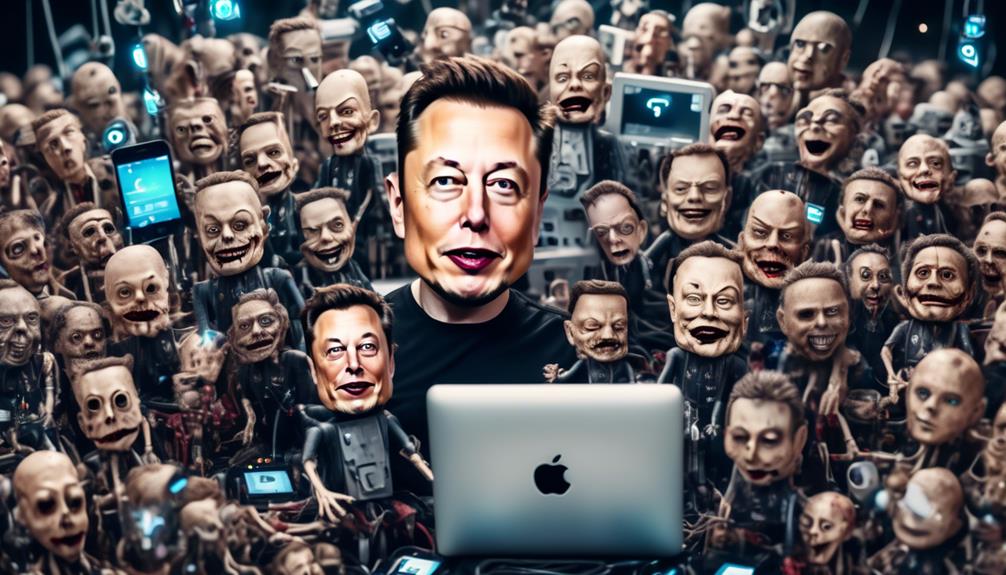

You might find it surprising that a single tweet from Elon Musk can wipe billions off stock market valuations, yet this illustrates the immense influence tech leaders wield in shaping internet culture today.
As you navigate the online world, you encounter a landscape punctuated by the thoughts and whims of figures like Musk, whose social media presence can catalyze significant reactions across global platforms. The discussion often centers on whether individuals like Musk represent the 'great man' of technology, single-handedly steering the course of innovation, or if they are simply the most visible part of a vast and intricate collaborative network that drives progress forward.
As you consider the power dynamics at play, the question arises: how does the cult of personality surrounding tech moguls like Musk affect our perception of their contributions, and what does this mean for the future of social media discourse? The answer is complex and unfolds in a myriad of interactions between public sentiment, market forces, and the technology itself, suggesting that the true impact of these tech leaders is as much about the cultural echo chamber they create as it is about the products they develop.
The Provocative Persona
The provocative persona of tech leaders like Elon Musk often overshadows the collective efforts of their teams, raising questions about the sustainability of their approach to innovation and management. You might've heard Jack Dorsey's support for Musk's heroism, but it's essential to recognize that the success of companies like Tesla and SpaceX isn't a one-man show. The breakthroughs you admire are the fruits of extensive collaboration, with countless talented individuals working behind the scenes.
Your perception of Musk may see him as a maverick capable of single-handedly turning Twitter around. However, this overlooks the potential risks his approach poses, including the loss of institutional knowledge and expertise. You can't ignore that Musk's Twitter antics have sparked controversies and legal headaches, proving that a tech leader's behavior reverberates far beyond their own timeline.
Online Influence Tactics
Tech leaders like Elon Musk wield their online presence skillfully, employing tactics that can shape company narratives and influence employee engagement. They're not just setting the agenda; they're actively engaging with their audience on social media, creating a dynamic where they can articulate a compelling vision that resonates with both employees and the broader public.
Your ability to captivate an online following isn't just about your charisma; it's about how effectively you leverage these platforms to foster a community around your brand.
Recognizing the limitations of 'great man' thinking, it's clear that the success of tech companies isn't down to a single individual's influence. Collaborative efforts are the bedrock of innovation and progress. However, the role of a tech leader in guiding and inspiring this collaboration through online channels is undeniable. You must understand that building a motivated workforce goes hand in hand with utilizing social media to communicate and engage.
When you're at the helm of a tech company, like Twitter, your online influence tactics are a key tool for initiating successful transformations. You're not just tweeting; you're strategically steering your company's culture and the industry's direction, one post at a time.
Memes and Movements
You've seen how memes can turn tech leaders into cultural icons, shaping internet culture and user engagement.
Now consider how these same figures drive online movements, leveraging their platforms to influence social and political landscapes.
As you navigate the complexities of meme-driven leadership, reflect on the impact tech influencers have on the digital realm and beyond.
Meme-Driven Leadership Dynamics
Understanding how memes shape the public personas of tech leaders offers insight into the power of internet culture in steering modern leadership trends. Memes can bolster or tarnish reputations, as seen with Elon Musk, whose meme-savvy approach both endears him to fans and invites critique. They're not just jokes; they're barometers of public sentiment, influencing how you're viewed by employees, stakeholders, and peers.
Whether it's rallying support or inciting discord, the meme-driven dynamics at play can lead to polarizing outcomes. You must navigate this landscape carefully because memes can amplify criticism and spark feuds, like those between Musk and Zuckerberg.
Grasping these dynamics is vital for understanding the evolving nature of leadership and its impact on organizational culture in the digital era.
Online Movements' Tech Influencers
In today's digital landscape, influential figures like Jack Dorsey and Elon Musk shape the trajectory of online movements through their endorsement of memes and engagement with internet culture.
Dorsey's support for Musk to lead Twitter reinforces the 'great man' narrative that a singular visionary can steer technological progress. However, this thinking underestimates the collective genius that actualizes innovations like those at Tesla and SpaceX.
While you might perceive Musk's social media antics as a triviality, his tweets have serious clout, capable of influencing markets and affecting stock prices.
Yet, Musk's potential overhaul of Twitter risks eroding the platform's foundational strengths. The challenges of content moderation loom large, and Musk's approach may threaten the platform's institutional knowledge and effectiveness.
Polarization and Backlash
You've witnessed how tech leaders like Musk can amplify extremes simply by their celebrity status, often overshadowing the collaborative efforts that truly drive progress.
As Musk's controversial actions unfold on platforms like Twitter, they spark polarized reactions that can lead to significant backlash, affecting both public sentiment and the company's internal dynamics.
It's crucial to understand that the impact of such controversies goes beyond headlines, potentially altering the very fabric of internet culture and workforce morale.
Amplifying Extremes
Tech leaders like Elon Musk wield their online influence in ways that can amplify polarization and provoke intense backlash. When Musk criticizes Twitter and its employees, the ripple effect is undeniable. His tweets don't just echo in the void; they often lead to tangible consequences, such as racially charged harassment campaigns.
Moreover, given Twitter's pivotal role in shaping public discourse, Musk's actions could inadvertently set the stage for broader societal conflicts.
Consider these three key impacts:
- Institutional Erosion: Musk's approach may erode Twitter's foundational expertise, threatening its future as a reliable platform.
- Workforce Stability: A fearful and distrustful workforce undercuts the potential for constructive transformation.
- Content Moderation: Musk's influence exacerbates the challenges of moderating content, especially with the complexities of artificial intelligence tools.
Celebrity Controversies Impact
While Jack Dorsey publicly supports Elon Musk's takeover of Twitter, the move ignites polarizing debates and underscores the complexities of celebrity involvement in tech leadership.
You must recognize that Musk's success with Tesla and SpaceX hinged on the collective effort of many, not just his vision. His approach to Twitter risks eroding the platform's very foundation, potentially dismantling any 'great man' myth Dorsey envisaged.
Musk's online antics, often the root of celebrity controversies, impact not only Twitter's reputation but also its stock value, spotlighting the perils of social media content regulation.
Furthermore, his public spats with figures like Zuckerberg only fan the flames of legal strife, raising crucial concerns about the balance between free speech and responsible content moderation.
Visionary or Villain?
Elon Musk's takeover of Twitter sparks a debate: is he a visionary set to revitalize a struggling platform, or a villain who could disrupt the delicate balance of internet culture? You're witnessing a moment where the tech titan's influence is being scrutinized.
On one hand, Jack Dorsey's endorsement suggests Musk could be the savior Twitter needs. Yet, you can't ignore the collaborative spirit behind Musk's achievements with Tesla and SpaceX, which a 'great man' narrative tends to overshadow.
Here's a deeper look at the implications:
- Institutional Knowledge: Musk's approach might cause a loss of Twitter's institutional memory and expertise.
- Market Influence: His tweets have the power to move markets, which can lead to legal controversies.
- Content Moderation: Twitter's challenge in content moderation could be exacerbated under Musk's leadership.
You're left to ponder whether Musk will be the visionary who ushers in a new era for Twitter or the villain in a tale of caution for internet culture. It's a narrative unfolding in real-time, and the consequences of this shift will be significant, for better or worse.
Tech Leader Responsibilty
As a tech leader, you're not just shaping technology but also molding the fabric of internet culture.
You must balance ethical leadership imperatives with the tremendous public influence you wield, ensuring your actions are accountable.
Navigating online interactions thoughtfully can mitigate the risks of eroding trust or fueling conflict within the digital community.
Ethical Leadership Imperatives
Tech leaders must prioritize ethical responsibilities, ensuring their actions uphold the integrity of both their workforce and the wider digital community. You have a pivotal role in shaping the culture and ethics of the internet. Your approach to leadership can either foster a positive environment or contribute to a more toxic digital landscape.
Here are the ethical leadership imperatives you should consider:
- Acknowledge the collective achievements of your team, moving beyond the 'great man thinking'.
- Cultivate a workplace that supports morale and mitigates the risk of losing institutional memory and expertise.
- Address the challenges of content moderation on platforms like Twitter, taking a stand against misinformation and hate speech.
Public Influence Accountability
You bear the weight of public influence, accountable for how your technological innovations and decisions ripple across society. Every tweet you send, every product you launch, and every policy you implement carries with it a burden of responsibility. As a tech leader, you've got to recognize that your words and actions set a precedent. They're not just passing moments; they can shape public discourse and impact lives.
Your public influence accountability means you're not just an innovator; you're a steward of societal trust. It's on you to ensure transparency, to champion ethical practices, and to be mindful of the social consequences of your work. You can't hide behind your brand's shadow; the world's watching, and it's your move that counts.
Navigating Online Interactions
Acknowledging the weight of public influence, it's crucial for tech leaders to also navigate online interactions with care and consideration for their vast impact. As a tech leader, you're not just an innovator but a cultural symbol. Your tweets, posts, and comments can shape public opinion and market trends with a single click. Remember, the digital footprint you leave behind doesn't fade quickly.
Here are three key points to consider:
- Think Before You Tweet: Every post by influential figures like Elon Musk can ripple through communities and economies.
- Lead by Example: Use your platform to promote positive discourse and responsible behavior online.
- Acknowledge the Echo: Understand that your voice can amplify messages far beyond your original intention.
Social Media Showdowns
Elon Musk's clashes with Mark Zuckerberg epitomize the power struggles reshaping the landscape of social media influence. Your attention to Musk's approach to Twitter reveals the potential for vast changes and challenges in how platforms operate. As you witness their public feud, you're seeing more than a mere spat; it's a battle with possible legal consequences that could alter the very fabric of Internet culture.
You've seen Musk's controversial remarks, and you know they're not without defense or consequence. The impact on X's Chief Executive and the company's direction is palpable. You're also aware of the condemnation Musk faces, not just from individuals but from major companies taking a stand. The lawsuit against Media Matters adds a layer of complexity, intertwining legal ramifications with public opinion.
Following the controversy, Musk's actions and statements have continued to ripple through social media. They're not isolated incidents but part of a broader narrative about the role and responsibility of tech leaders in shaping online discourse. You're observing, in real-time, the unfolding future implications of these social media showdowns.
Cult of Personality
When a tech leader like Musk commands unwavering loyalty, it's often a sign of a Cult of Personality taking root in the digital age. You've seen it yourself—the memes, the tweets, the merchandise all idolizing one man. Elon Musk isn't just a CEO; to many, he's a visionary, a rebel, a prophet of the tech world.
But let's dive beneath the surface of this adoration:
1. Heroic Image****: Elon Musk's ventures into space and electric vehicles paint him as a savior of the future, turning complex achievements into a single person's crusade.
2. Devotion Over Reason****: His followers often defend him passionately, brushing off critiques and mistakes as either necessary sacrifices or misunderstandings by those who aren't 'in the know.'
3. Suppression of Dissent****: There's a tendency to downplay or attack voices that question Musk's decisions, leading to an echo chamber where his word is the final say.
This isn't just about a rich CEO getting richer; it's about how you perceive leaders in the tech industry. Are you judging Musk based on his real impact, or are you swept up in the emotional tide that his Cult of Personality generates?
The Tesla and Twitter Effect
While the Cult of Personality phenomenon amplifies a leader's perceived prowess, it's in companies like Tesla and Twitter where their influence on internet culture is most tangibly seen. Elon Musk, the eclectic billionaire behind both brands, has leveraged his notoriety to craft a unique digital narrative.
You've seen Tesla not just as a car manufacturer but as a symbol of innovation and disruption, largely due to Musk's strategic use of social media to engage with fans and critics alike.
On Twitter, Musk's presence is even more pronounced. His tweets can cause seismic shifts in public opinion and have even influenced stock market valuations. You've witnessed him float ideas, spar with skeptics, and announce news about Tesla, all in real-time.
His approach isn't just about promoting his companies; it's about shaping how you interact with them. You're not just buying a car or scrolling through a feed; you're participating in a larger conversation, one that Musk is often leading.
You're living in an era where one individual's online behavior can ripple through internet culture, affecting how you perceive not only Tesla and Twitter but the tech industry as a whole. Musk's digital footprint is massive, and you're all walking in the impressions he's left behind.
Internet Culture Clashes
Tech leaders like Musk and Zuckerberg are at the forefront of shaping internet culture, often clashing in ideologies that ripple through their platforms and affect users worldwide. Elon Musk's takeover of Twitter is seen as a panacea by many, a testament to the 'great man' theory that dominates Silicon Valley. But this perspective underestimates the collective effort required to innovate.
Here are three critical points to consider about the influence of tech leaders like Elon Musk:
- Great Man vs. Great Team: The belief that Musk alone can rescue Twitter ignores the collaborative efforts essential for technological advancements.
- Workforce Dynamics: Musk's vision for Twitter hinges on rallying a team that shares his drive and commitment, underscoring the need for collective buy-in over individual charisma.
- Contentious Leadership: Musk's stance on content moderation and his social media clout not only sway markets but also spark legal and ethical debates, highlighting the far-reaching impact of tech moguls.
Musk's tussles with Zuckerberg exemplify these clashes, with their public spats possibly leading to legal entanglements that could shape the future of their companies. The culture within internet spaces is molded by such conflicts, which resonate with every tweet and update they make.
Frequently Asked Questions
What Was Zip2 by Elon Musk?
Zip2, founded by Elon Musk, was your early online map and business directory, paving the way for services like Google Maps. Selling it in 1999, he made a fortune to fund future projects.
What Role Do Tech Leaders, Such as Elon Musk, Play in Internet Culture and Digital Journalism?
Tech leaders like Elon Musk influence social media navigation in journalism by shaping digital communication platforms and setting the stage for internet culture. Their involvement impacts the way information is disseminated and consumed, blurring the lines between traditional journalism and social media.
Conclusion
You've seen how tech titans shape our world, how their tweets can stir the masses, and their visions divide or unite.
Remember, behind the screen, it's not just one man's game. It's a collective push and pull, a melding of minds that forges our digital landscape.
So don't just follow—question, engage, and contribute. Your voice is as vital in this cultural symphony as any leader's.
Together, we're the architects of the internet's ever-evolving culture.