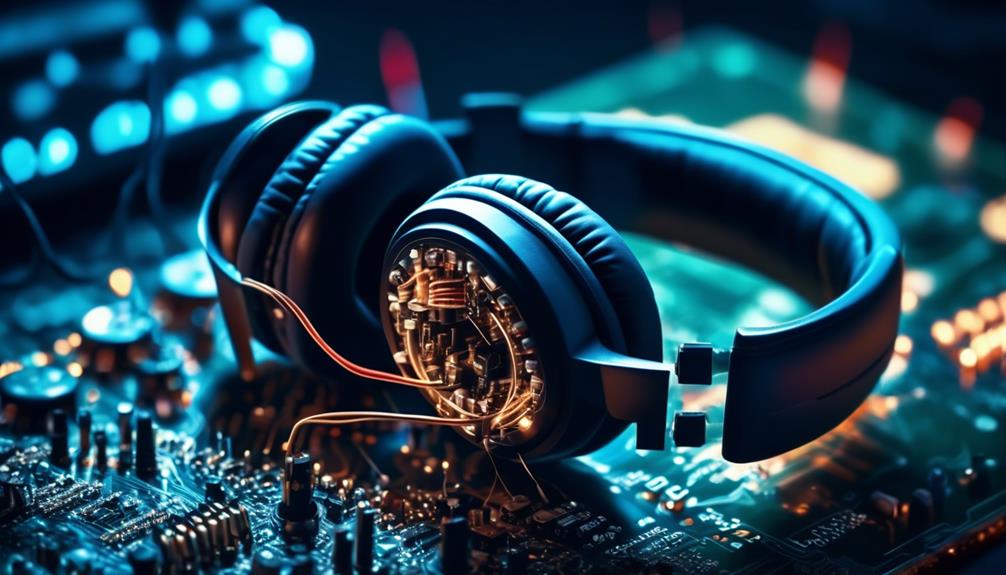

As you navigate the intricate labyrinth of audio technology, DEH P stands as a beacon, much like a lighthouse guiding ships through a foggy night.
In this webinar, Peter Moses will unravel the complex threads that compose the rich tapestry of sound engineering, from the evolution of microphones to the subtle intricacies of signal flow.
You'll uncover the core principles that have shaped the way you listen to music, watch films, and experience media.
What's more, you'll gain insight into how these technologies not only affect the quality of audio but also how they can catapult careers in this dynamic field.
Stay tuned as we explore the innovative breakthroughs of DEH P and consider how the future of audio might transform your understanding of sound.
The Evolution of Audio Tech
Tracing the journey from analog to digital, the evolution of audio technology has revolutionized how you capture, store, and enjoy music. Analog audio faithfully represents sound waves, but it's digital audio, with its precise sampling and quantization, that defines the digital age. You're now in a world where every sound can be broken down into binary data, a series of 0s and 1s that capture the essence of a melody or a beat.
The ADC (analog-to-digital conversion) process is the backbone of this transformation. It's a complex dance of capturing sound and assigning numerical values that can be stored, manipulated, and transmitted with ease. Think of streaming platforms like Spotify and Apple Music; they're only possible thanks to ADC, which allows millions of songs to be at your fingertips.
Your listening experience hinges on audio quality, which is influenced by bitrates, formats, and the choice between lossy and lossless compression. The higher the bitrate, the better the sound – but with a trade-off in file size. In this digital age, you've got the power to choose: pristine, uncompressed audio that fills your room with clear sound, or compressed files that save space while still delivering quality music.
The relentless evolution from analog to digital keeps pushing the frontiers, constantly redefining audio engineering and music technology.
Core Principles of Sound Engineering
You're entering the realm of sound engineering, where capturing pristine audio quality is the foundation of everything you listen to.
It's not just about recording; you must also master the essentials of mixing and mastering to shape the final sound.
Consider these processes the backbone of audio production, ensuring the music you stream or download meets the highest standards of clarity and richness.
Capturing Pristine Audio Quality
To capture pristine audio quality, sound engineers adhere to rigorous standards in both the analog-to-digital conversion (ADC) and the subsequent digital-to-analog conversion (DAC) processes. This ensures the dynamic range of the sound is preserved, providing you with a rich and detailed listening experience.
Here's how you can appreciate the intricacies of this process:
- Analog audio is captured in its purest form before being transformed into digital samples.
- Regular intervals during ADC ensure no detail is missed.
- Quantization assigns precise values, maintaining audio integrity.
- High bitrates in digital formats equate to clearer, more vibrant sound.
- Services like Spotify and Apple Music depend on these conversions for streaming quality audio to your devices.
Mixing and Mastering Essentials
Diving into the world of audio production, mixing and mastering are critical steps that transform raw recordings into polished tracks ready for listeners to enjoy.
In the realm of audio engineering, you'll find that mixing is all about combining individual tracks into a unified audio mix. It's where you use EQ to fine-tune frequencies, ensuring each instrument sits perfectly in the sonic landscape. Compression is your go-to for managing dynamic range, giving the mix a consistent level that feels cohesive.
Mastering then takes the baton, focusing on enhancing and fine-tuning the overall mix for distribution. It's the final touch that ensures your music translates well across various listening environments. By mastering levels and panning, you create a balanced and immersive experience, crucial for captivating your audience.
DEH P's Innovative Breakthroughs
You've witnessed the surge in audio quality and streaming capabilities, but you may not know that DEH P's breakthroughs are behind this revolution.
They've not only pioneered sound processing techniques but also pushed the boundaries of audio hardware development.
Their focus on creating an immersive listening experience has set new standards in music technology.
Pioneering Sound Processing Techniques
DEH P's groundbreaking advances in sound processing have fundamentally transformed the audio technology landscape, setting unprecedented standards for quality and fidelity. As you dive deeper into their innovative world, you'll find that the impact of their pioneering techniques on digital audio is both profound and far-reaching.
Here's how DEH P has changed the game:
- Revolutionized audio technology with cutting-edge signal processing
- Enabled significant breakthroughs in audio enhancement
- Established new benchmarks for audio quality and fidelity
- Reshaped the audio engineering field, influencing subsequent developments
- Made a lasting mark on the music industry with their methods
With these contributions, DEH P ensured that the richness and clarity of sound through digital audio became more immersive than ever before.
Advanced Audio Hardware Development
Building on their signal processing expertise, DEH P has also made significant strides in advanced audio hardware development. Their team, led by industry veteran Peter Moses, has been at the forefront of refining the Analog to Digital Conversion (ADC) process—a cornerstone in music streaming platforms like Spotify and Apple Music. This process, which breaks down into sampling and quantization stages, is pivotal for storing and transmitting audio in digital formats.
DEH P's innovations ensure that the transition from analog to digital preserves the integrity of the original sound. They're focused on achieving high-fidelity playback, where the choice of format and bitrate is crucial. Higher bitrates mean better quality, which DEH P's hardware aims to optimize, even for lossy formats that compress audio to reduce the bitrate.
Immersive Listening Experience Innovations
Venturing into the realm of sound, DEH P's Immersive Listening Experience Innovations have transformed the way we immerse ourselves in audio. As you delve into these groundbreaking advancements, you'll find that the audio signal is no longer a mere transmission but a gateway to a captivating, multi-dimensional sonic environment. DEH P is leading the charge in revolutionizing the audio industry with their unparalleled auditory experiences.
Here are the highlights:
- Multi-dimensional audio landscapes
- Enhanced listener engagement
- Groundbreaking immersive sound technologies
- Unprecedented audio quality and performance
- Industry-redefining innovations
These breakthroughs set a new standard in immersive listening, offering you a sound experience that's richer and more enveloping than ever before.
With DEH P, prepare to hear the world like never before.
Impact on Music and Media
Exploring the digital landscape, you'll find that the transition from analog to digital audio has fundamentally altered the music and media industries. This seismic shift has transformed how a piece of music is captured, stored, and transmitted. Gone are the days when the warm crackle of a vinyl record was the norm. Now, in the world of audio, the focus is on digital precision and the convenience of streaming platforms like Spotify and Apple Music.
These platforms, functioning on the backbone of analog-to-digital conversion, allow you to access an immense library of songs and albums at your fingertips. The quality of what you hear, whether it's through earbuds or speakers, is dictated by audio format and bitrate. With higher bitrates, which result from increased sampling rates and bit-depth, you're treated to a richer, more nuanced sound.
In the realm of audio engineering, the reliance on digital technology is evident. Innovations continue to drive the industry forward, making the production and delivery of music more efficient and accessible. Webinars discussing the evolution of microphones, the role of speakers, and the history of audio recording shed light on how the digital revolution has amplified the signal flow, forever changing how you experience music and media.
The Future of Audio Experience
As we look ahead, the future of audio experience promises to be shaped by the ongoing advancements in analog to digital conversion technologies. You're already familiar with the impact of streaming platforms, and it's their reliance on ADC and DAC processes that will continue to enhance your listening. The audio quality you enjoy hinges on the format and bitrate chosen during playback, and these decisions are crucial for the future audio experience.
Here's what you can look forward to:
- Higher-quality streaming services with advanced codecs delivering crystal-clear sound.
- Immersive audio formats that make you feel like you're at a live performance.
- Smart amplifiers and speakers that adjust to your room's acoustics for optimal sound.
- Enhanced recording equipment for musicians, enabling richer and more accurate sound capture.
- Innovative educational resources, like webinars by experts like Peter Moses, guiding you through the complexities of audio technology.
Navigating Audio Tech Careers
If you're aiming for a career in audio technology, a solid grasp of both analog and digital audio fundamentals is crucial. You'll often deal with analog-to-digital conversion processes, which are the cornerstone of modern audio engineering and music technology. Understanding how signals are converted, manipulated, and ultimately streamed is part of your daily workflow.
Years of experience will deepen your knowledge of bitrates, formats, and the nuances of audio quality. These elements are vital as you navigate careers that span recording studios to streaming platforms. You must be adept at preserving sound fidelity during conversion and distribution, ensuring that the end listener enjoys the best possible audio experience.
Keep an eye out for educational resources like webinars, for instance, those presented by experts like Peter Moses, which can offer you a wealth of information and enhance your skill set. As you progress, your ability to innovate and adapt to new technologies will set you apart in this dynamic field. So invest in your knowledge base, stay curious, and be ready to evolve with the industry.
Frequently Asked Questions
What Is American University Audio Technology Ranked?
You're looking at a top-ranked program! American University's Audio Technology program is among the nation's best, offering you extensive training in both analog and digital audio, with hands-on experience in cutting-edge facilities.
Who Founded Audio Media?
You'd find Emile Berliner credited with founding audio media, thanks to his invention of the gramophone and flat disc record, while Thomas Edison's phonograph also played a pivotal role.
How does Audio Technology play a role in the Modern Beverage Industry?
The role of tech in the beverage industry has advanced significantly with audio technology. From creating immersive soundscapes for promotional events to enhancing the customer experience in bars and restaurants, audio tech has become a vital tool for marketing and brand engagement in the modern beverage industry.
Conclusion
You've journeyed through the intricate tapestry of audio tech, from its humble beginnings to the game-changing innovations of DEH P. Your passion's the key to unlocking new realms in music and media, shaping the sonic future.
As you stand at the threshold of an electrifying career, remember this: the melody of progress is in your hands. So tune into your potential and amplify your impact—it's time to make waves in the world of sound.