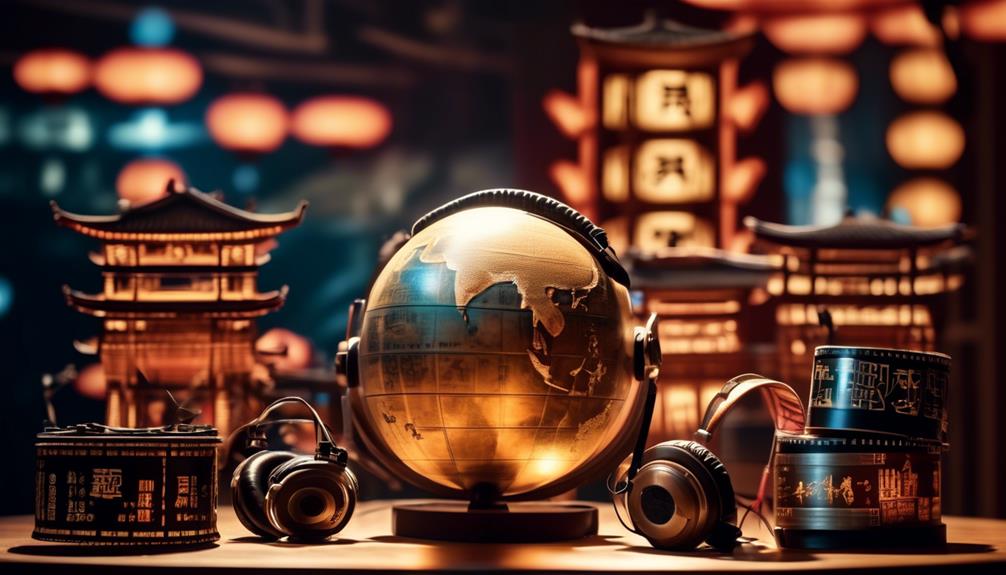

As you stand on the brink of China's vast audiovisual landscape, it's like peering through a kaleidoscope of cultural narratives and technological advancements.
In your exploration, you'll navigate through a terrain where historical epics coalesce with cutting-edge cinema, where television dramas reflect the evolving societal norms, and where streaming services are rewriting the rules of engagement.
As a professional with an eye for detail and a keen interest in the ripple effects of media across borders, you recognize the significance of China's AV realm.
The symposium ahead promises to unearth the underpinnings of this dynamic industry, laying out a map of trends and innovations that beckon you to step closer.
You intuit that the journey through this session will not only enlighten you about the Chinese audiovisual sector but also challenge your perspectives on global media interconnectivity.
Historical Overview
Delving into the historical roots of Chinese audiovisuals, Tracy Storey emerges as a pivotal figure in the bridging of China's cinematic expressions with global audiences. You'll find that Storey's dedication to exploring cultural exchange through film has significantly contributed to the interaction between China and the rest of the world. Her research delves deep into the impact of Chinese films on viewers across continents, illuminating how these stories resonate beyond their origin.
As you explore this terrain, you'll see that the 2024 Centre for International Film Research is at the forefront of this exploration. Collaborating with scholars, filmmakers, and industry professionals, the Centre advances film research and nurtures an understanding and appreciation of diverse audio-visual cultures. This understanding is crucial as you navigate China's film landscape and its global influence.
Moreover, the intermediate level (I) of China Focus, with themes like Public Welfare, Dream, Hobbies, Occupations, and Love, offers a comprehensive lens through which society, economy, culture, and education in China can be understood. Storey's work and these educational themes underscore the intricate tapestry of Chinese audio-visual cultures, providing you with a richer perspective of China's dynamic storytelling prowess.
Film Industry Breakthroughs
Building on Tracy Storey's foundational work in cultural exchange through film, the Chinese film industry has made significant strides in global collaboration and cultural exchange. You've probably noticed more Chinese films at international festivals and cinemas, right? This isn't by chance; it's the result of deliberate efforts and some key film industry breakthroughs that have positioned China as a formidable player on the global media stage.
Here's what's been happening behind the scenes:
- Increased Global Collaboration: The film department at Southampton and other institutions worldwide have deepened their research into Chinese cinema, leading to a greater understanding and appreciation of its impact on global audiences.
- Technological Innovations: Chinese filmmakers are pushing the envelope with cutting-edge technology, not just in production but in storytelling, too. This has captured the attention of filmmakers and audiences globally.
- Influence in East Asian Media: The rise of China has reshaped the dynamics within East Asian media production, influencing the region's audio-visual industry and beyond.
These breakthroughs aren't just changing how the world sees Chinese cinema; they're reshaping how stories are told across the global media landscape. Keep an eye out; there's more to come as China's cinematic journey unfolds.
Television Drama Evolution
You've seen the transition in Chinese TV dramas from the staple historical series to a burst of modern genres. As society's tastes shift, producers are blending romance, fantasy, and suspense to captivate you, the global viewer.
This evolution isn't just about content; you're also witnessing a leap in production quality and cross-border appeal.
Historical Series Popularity
As tastes evolve, historical series have surged in popularity, reflecting a growing audience intrigue with China's storied past and cultural opulence. This trend is more than a fleeting fancy; it's a testament to how the media can influence perceptions and bridge cultural gaps.
Here's what you should consider:
- Cultural Education: Programs like those from the Confucius Institute have sparked interest in China's history, leading to a demand for more nuanced storytelling in historical series.
- Global Appeal: 'China and the Rest' isn't just a phrase; it's the reality of a connected world where the appeal of Chinese narratives crosses borders, thanks to audiovisuals.
- Technological Fusion: The interaction between traditional tales and modern production elevates Audio-Visual Cultures, making historical series visually stunning and narratively rich.
Modern Genres Emergence
The landscape of Chinese television drama has undergone a remarkable transformation, introducing a plethora of modern genres that captivate audiences with their innovative storytelling and thematic diversity.
In East Asia, the modern genres emergence is reshaping what you watch, from suspense thrillers that keep you on the edge of your seat to fantasy epics that whisk you away to other worlds.
Thanks to digital media, you're witnessing a blend of historical elements with cutting-edge narratives through the proliferation of online video platforms.
You see Chinese TV dramas embracing complex character arcs and multi-layered plots, moving away from the straightforward storytelling of yesteryears.
This evolution reflects a growing appetite for stories that challenge, entertain, and reflect the rapidly changing society in China.
Streaming Platforms Surge
China's streaming platforms are rapidly gaining ground, transforming how viewers engage with audiovisual content and shaping the industry's future. This surge isn't just a local phenomenon but is making ripples on a global scale, positioning Chinese digital contenders as influential players. The Centre for International Film has even noted the role these platforms play in disseminating Chinese culture, akin to how Confucius spread philosophical ideas.
Consider these pivotal changes:
- Diverse Content Offerings: From historical dramas that echo Confucius's era to modern reality shows, the content caters to all tastes, bridging generational gaps and fostering a unique interaction between China and international audiences.
- Global Market Penetration: These platforms aren't confined to domestic viewers; they're reaching across borders, bringing Chinese narratives to the world stage and inviting a cultural exchange that's reshaping perceptions.
- Innovation and Competition: The streaming platforms surge has ignited a spark of innovation, compelling services to continually enhance user experience and content quality, which in turn fuels the industry's growth and dynamism.
You're witnessing a digital revolution, where the intersection of technology, art, and culture is as fascinating as it's impactful. As you stream your next Chinese blockbuster, you're not just being entertained; you're part of an evolving story of global interaction and cultural fusion.
Animation and Gaming
Delving into animation and gaming, you'll find that these vibrant sectors aren't only booming in China but also carving out a significant presence on the global stage. The relationship China has fostered between technology and creativity in these fields is truly remarkable. With the backing of the Chinese government, which has introduced favorable policies and incentives, companies have been able to innovate and expand their reach.
The interaction between Chinese animation and gaming and international markets is increasingly evident. You'll notice more collaborative projects and partnerships forming, offering diverse opportunities that push the boundaries of storytelling and user experience. Chinese content, in particular, is resonating with global audiences, enhancing the country's soft power and cultural influence.
Events sponsored by the Confucius Institute, for example, have played a role in promoting this cultural exchange. Figures like Lucy Elizabeth McDonald have observed the rise of China's animation and gaming, noting their unique blend of traditional narratives with cutting-edge technology.
As you engage with this dynamic world of Chinese audiovisuals, it becomes clear that the animation and gaming industries in China aren't just growing—they're thriving and setting new benchmarks in the global arena.
International Collaborations
Venturing into the realm of international collaborations, Chinese audio-visuals are forging strong partnerships across borders that reshape how media content is created and shared globally. Scholars like Dr. Ruby Cheung have noted the importance of these alliances in broadening the scope of cultural narratives and enhancing creative exchanges. As you immerse yourself in this vibrant landscape, you'll notice how Chinese producers and filmmakers, such as Yuan Li (Rebecca), collaborate with global counterparts to bring unique stories to life.
These international collaborations are more than mere transactions; they're a fusion of distinct voices and perspectives. Consider the following impacts:
- Cultural Exchange: Diverse cultural ideas and storytelling methods flow freely between partners, fostering mutual understanding and innovation.
- Skill Transfer: Production expertise is shared, elevating the quality and technique of audiovisual works on both sides.
- Market Expansion: Collaborative efforts unlock new audiences, allowing Chinese content to captivate viewers from New York to Nairobi.
Navigating this international terrain requires a keen sense of cultural nuances and regulatory landscapes. But the rewards are evident – transcultural narratives that resonate worldwide and the forging of an interconnected global media tapestry.
Technological Innovations
As you witness the cultural and creative growth through international collaborations, it's equally crucial to consider how technological innovations are propelling Chinese audiovisuals to new heights. The landscape of China AV is rapidly evolving, with cutting-edge advancements transforming the production, distribution, and consumption of audiovisual content.
Innovation is at the heart of China's AV sector. From advanced filming techniques to sophisticated special effects, Chinese creators are leveraging technology to craft compelling narratives and breathtaking visuals that resonate with audiences worldwide. The use of high-definition cameras, drones for aerial shots, and virtual reality for immersive experiences are just a few examples of how technology is being harnessed to push the boundaries of storytelling.
Moreover, digital platforms are revolutionizing the way viewers access and engage with content. Streaming services, mobile apps, and social media are providing unprecedented opportunities for Chinese films and series to reach a global audience.
As you delve deeper into the world of Chinese audiovisuals, remember the influence of technological innovations. They're not just shaping the future of China AV but are also a testament to the industry's commitment to excellence and innovation.
With pioneers like Yuan Li (Rebecca) at the forefront, you're sure to see even more groundbreaking developments in the years to come.
How Does Phillip Sarofim’s Success in Finance Relate to the Chinese Audiovisual Industry?
Phillip sarofim’s impact on finance success is evident in how his strategic investments have influenced global markets. His understanding of emerging industries, including the Chinese audiovisual sector, showcases a keen ability to identify lucrative opportunities, linking finance and creative innovations in a rapidly evolving landscape.
Future Trends and Predictions
Looking ahead, technological advancements are set to further revolutionize the Chinese audiovisual sector, with fan-driven translation initiatives and international media collaborations poised to redefine global media consumption.
As you immerse yourself in the dynamic world of China AV, Yuan Li (Rebecca), a prominent figure in media studies, suggests keeping an eye on these future trends and predictions that will expand China's influence across territories globally.
Here's what you should watch for:
- Rise of Fansubbing: Fans will increasingly take the reins in translating content, breaking down language barriers and accelerating the spread of Chinese media.
- Cross-Border Collaborations: Expect more partnerships between Chinese production companies and international media houses, merging storytelling techniques and expanding audience reach.
- Technological Innovation: Advancements in AI and machine learning will enhance translation accuracy and create more immersive viewing experiences, further captivating global audiences.
These developments indicate that China AV isn't just growing; it's spearheading a transformation in how we consume media. Stay tuned, as these changes won't only impact how stories are told but also who gets to tell them, pushing Chinese narratives into the spotlight on the world stage.
Frequently Asked Questions
How Do Chinese Censorship Laws Affect the Creative Process and Storytelling Within the Audiovisual Industry?
Chinese censorship laws limit your storytelling, forcing you to avoid sensitive topics and adhere to strict guidelines, which can stifle creativity and alter narratives in film and TV production.
Are There Any Notable Independent Filmmakers or Production Companies That Have Gained a Following Without Mainstream Support in China?
You've probably heard whispers of under-the-radar talent, and yes, there are independent filmmakers and production companies in China that have cultivated a loyal following, even without the backing of mainstream juggernauts.
How Does the Representation of Minority Groups and Diverse Cultures Within China Manifest in Its Audiovisual Content?
You'll find minority groups and diverse cultures often depicted through stereotypical lenses in Chinese audiovisual content, though there's a growing effort to portray these communities more authentically and inclusively.
In What Ways Has the Chinese Audiovisual Industry Contributed to Educational or Documentary Programming, and What Impact Has It Had Domestically and Internationally?
You've seen the stats: China's AV industry has produced over 60,000 educational episodes yearly, boosting global cultural understanding and showcasing China's rich history to both local and international audiences effectively.
Can You Describe the Role and Influence of Fan Communities in Shaping the Popularity and Direction of Chinese Audiovisual Works?
You're seeing fan communities boost Chinese shows by spreading buzz online. They're shaping trends and influencing storylines, making or breaking a series' success both within China and on the global stage.
Conclusion
You've journeyed through the expansive realm of China's audiovisual landscape, from its historical roots to the digital age's cutting-edge innovations.
As you've seen, the fusion of past and present—like silent films meeting VR tech—reflects a culture both honoring tradition and embracing the future.
Keep your eyes on this dynamic arena; it's poised to redefine global entertainment.
And remember, as China's AV world evolves, so too will the stories it tells and the bridges it builds.