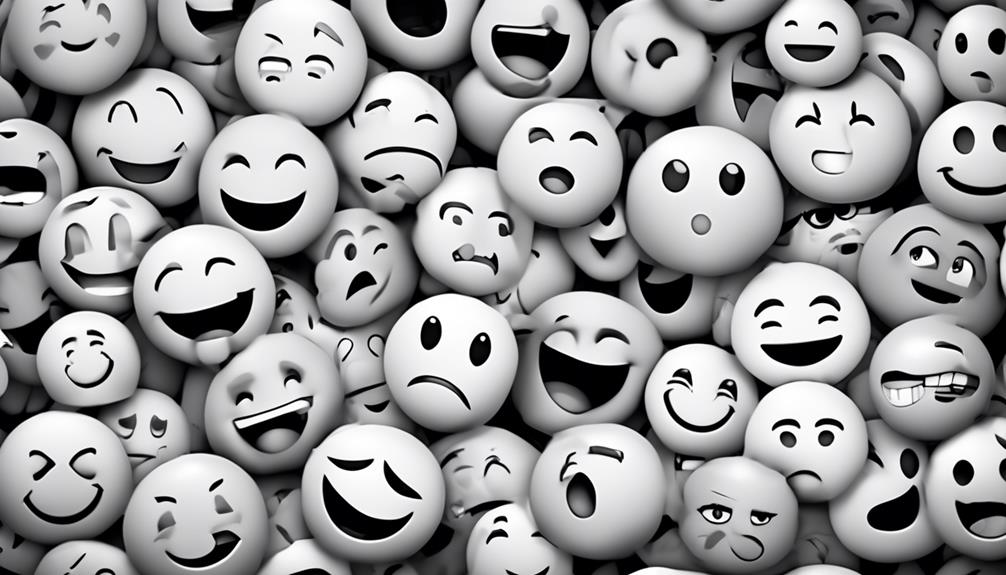

Consider the last text you sent; chances are, you included an emoji to punctuate your point or convey an emotion that words alone couldn't capture.
In the realm of digital communication, you've likely encountered the option to choose from a spectrum of skin tones for your emojis, a feature designed to promote inclusivity and representation. However, amidst this colorful array, the existence and use of black and white emojis persist, offering a study in digital expression that is both nuanced and telling.
As a professional examining this trend, you'll find that these monochromatic symbols carry their own cultural weight and reveal much about our interactions in the digital sphere. While they may seem simple at first glance, there's a complexity to their usage and impact that invites further exploration.
What do these colorless icons say about our digital society, and how might their prevalence influence the future of our online discourse? As this discussion unfolds, prepare to uncover the layers of meaning behind the seemingly straightforward black and white emojis.
Emoji Evolution and History
As you explore the world of digital communication, it's fascinating to consider how emojis, once simple black and white symbols, have evolved into a complex, colorful language of their own. This transformation didn't happen overnight. It's the result of meticulous work by the Unicode Consortium, the organization that standardizes text across different software platforms.
Back in the 1990s, emojis were just a blip on the radar, a quirky way for Japanese phone users to add emotion to their texts. They were basic, lacking the diversity and nuance you're accustomed to today. But as mobile technology spread, so did the demand for these expressive icons.
The Unicode Consortium stepped in to ensure consistency, so an emoji sent from one device would look the same on another. This standardization was key to the emoji explosion. As they gained global popularity, the library of emojis expanded, moving beyond the black and white icons of the past to the vibrant array that fills your keyboard now.
You're witnessing a language in motion, shaped by cultural trends and technological advancements. Emojis are more than just fun—they're a testament to human creativity and our relentless drive to communicate in ever more personalized ways.
The Allure of Monochrome
In the realm of digital communication, monochrome emojis stand out for their elegant simplicity, offering a timeless touch to your messages. These black and white symbols strip away the noise of color, bringing a sense of sophistication to the emojis used. You'll find that the lack of color doesn't limit expression; instead, it opens up a canvas for a more nuanced interpretation.
Monochrome emojis evoke a classic vibe, reminiscent of old photographs or vintage films. They're versatile, fitting just as seamlessly in a formal email as they do in a casual chat. Their adaptability means they can represent a wide array of emotions and concepts without the distraction of hues.
The beauty of monochrome lies in the striking contrast it creates. It's minimalism that catches the eye, allowing the essence of the emoji to shine through. You're not just sending a thumbs-up or a heart; you're invoking a feeling, a mood that transcends the emoji itself.
The allure of monochrome is in this visual impact, the way it can communicate so much with so little. When you choose these emojis, you're embracing a digital expression that's as impactful as it's understated.
Communicating With Simplicity
While the allure of monochrome emojis offers a classic touch, embracing simplicity in our digital interactions becomes even more pronounced when we opt for these clear, straightforward symbols. You're part of a larger conversation, one that started with emojis' uniform yellow skin tone, a default meant to be neutral but often perceived as lacking representation.
Then came 2015, a pivotal year when modifier codes were introduced, allowing emoji use to reflect the diverse tapestry of human skin tones.
You've likely noticed how friends, family, and even you tend to select emojis mirroring your own skin tone. It's a subconscious nod towards personal representation, a way to say, 'I'm here, and I'm part of this digital universe.'
This shift in emoji use is more than just customization; it's a statement that every message you send can represent the diversity of humanity, dismantling racial barriers pixel by pixel.
Cultural Impact of Colorless Icons
Colorless emojis transcend cultural boundaries, offering a universal mode of expression that enhances inclusion in our digital conversations. Despite the evolution of emojis to include various skin tones for more personalized representation, the simplicity of black and white icons serves a unique, integrative purpose. They're not just placeholders; they're a nod to the universality of human emotion, transcending the specifics of skin tone.
Here's why you should appreciate the cultural impact of these colorless icons:
- Inclusivity: They're accessible to all users, regardless of race or ethnicity.
- Neutrality: They avoid unintended biases or assumptions linked to skin tone.
- Versatility: Perfect for any context, they're adaptable to a wide range of conversations.
- Simplicity: Without color, these emojis cut through the clutter, focusing on the essence of the message.
- Equality: They symbolize an equal footing in digital communication, where the focus is on shared human experience.
Usage Patterns Across Platforms
You've likely noticed that not all emojis are created equal across different digital landscapes. As you toggle between your favorite apps, you'll see that platform preference variations influence which emojis rise to popularity.
Moreover, it's fascinating to observe how age-related usage trends shape the emoji lexicon in unique ways on each platform.
Platform Preference Variations
Diving into the realm of platform-specific preferences, users often exhibit distinct emoji usage patterns across various social media and messaging applications. These platform preference variations reflect the digital environment's influence on emotive expression. Here's what you should know:
- Users regularly choose emojis with skin tones mirroring their own for self-identification.
- Tweets with diverse skin tone emojis generally carry positive messages.
- Projects like Angélica Dass's Humanae highlight the need for emoji diversity.
- Emojis with varying skin tones are pivotal for inclusion on social platforms.
- Gender-based emoji usage patterns challenge traditional stereotypes, with men frequently using sentiment-related emojis.
Understanding these usage nuances is essential for grasping the intricacies of digital communication and inclusivity.
Popular Emojis Comparison
As we shift focus to the comparison of popular emojis, it's evident that usage patterns vary significantly across different digital platforms. The most used emoji might be a cheerful yellow face on one app, while on another, a heart or thumbs-up takes the lead.
Since the introduction of modifier codes in 2015, the ability to change the skin tone of emojis has allowed you to select hues that align with your own identity, enriching digital expression. Tweets employing these varied skin tones are predominantly positive, illustrating a move towards greater inclusivity.
Current research, encompassing millions of users and citations, underscores the importance of these nuanced choices in emojis. They don't just convey messages; they reflect the diversity of humanity, subtly shaping how you present yourself in the digital realm.
Age-Related Usage Trends
Examining age-related usage trends reveals that different generations often adopt distinct emoji patterns that reflect their unique communicative styles and preferences. You might've noticed that your emoji use differs from that of your parents or even your younger siblings. This isn't just a personal choice; it's part of a broader pattern.
- Emojis as digital inclusion tools: Users pick emojis that mirror their own skin tone.
- Identity expression: Emojis help present diverse identities across digital platforms.
- Contextual emoji meanings: The same emoji can carry different connotations depending on the context.
- Emotional expression: Emojis are crucial for conveying emotions electronically.
- Gender variations: Men and women use emojis differently, with nuances in sentiment expression and recognition.
These insights help you understand the layered ways we communicate across age groups and platforms.
Design Philosophy Behind Black and White
You'll find that the monochrome aesthetic of black and white emojis isn't just about style; it's infused with meaning.
The simplicity of these designs strips away distractions, allowing the symbolism behind each emoji to shine through.
Moreover, the stark contrast enhances visibility, which in turn can affect how you perceive and interpret these digital symbols.
Monochrome Aesthetic Appeal
Delving into the monochrome aesthetic appeal reveals a design philosophy deeply rooted in the powerful simplicity of black and white. This approach strips away the distraction of color, allowing you to appreciate the essence of design elements without the complexity of varying skin tones and hues. By focusing on the contrast between black and white, designs can achieve a striking balance that resonates with a sense of elegance and modernity.
- Simplicity: Embracing minimalism for maximum impact
- Contrast: Highlighting the visual power of opposites
- Timelessness: Creating designs that endure beyond trends
- Versatility: Adapting to multiple contexts without color limitations
- Creativity: Exploring patterns and gradients within a monochromatic palette
Black and white emojis, therefore, stand out, offering a universal appeal that transcends cultural and personal color associations.
Symbolism in Simplicity
Building on the monochrome aesthetic, the design philosophy behind black and white emojis taps into the symbolic power of simplicity, where every curve and line is laden with meaning. You're engaging with a form of minimalism that elevates contrasting elements to an art form.
This approach strips away the distraction of color, pushing you to appreciate the elegance and timelessness inherent in the shapes and composition. It's a visual language that can convey a spectrum of emotions—classic, formal, edgy, or modern—through stark visual balance.
The symbolism in simplicity isn't just a stylistic choice; it's a deliberate statement. When you use black and white design, you're embracing sophistication and creating a strong visual impact with every digital expression.
Contrast and Visibility Impact
Black and white emojis offer stark clarity, ensuring that each symbol pops with unmissable contrast on any backdrop. This visual punch is pivotal in digital communication, where you rely on emojis to express emotions quickly and effectively during social interactions. The design philosophy behind this color choice is all about maximizing impact and readability.
Here's why this design choice matters:
- Enhanced Visibility: Clear visibility across various devices and screens.
- Striking Contrast: Stands out against both light and dark themes.
- Universal Appeal: Simple for all users to understand.
- Emotional Clarity: Conveys expressions unambiguously in monochrome.
- Design Consistency: Maintains a uniform look across different platforms.
The contrast in black and white emojis isn't just aesthetic—it's a functional feature that enriches your social interactions online.
Emotional Expression in Grayscale
Grayscale emojis offer a simplified means of conveying emotions, sidestepping the complexities of racial representation in digital communication. When you use these neutral symbols, you're choosing a form of emotional expression in grayscale that's inclusive and avoids emphasizing skin tones. This can be especially important in contexts where racial implications might detract from the intended message.
These grayscale versions are designed to standardize emotional expression across different platforms and user groups. By doing so, they aim to prevent potential biases that might arise with colored emojis. You don't have to worry about accidentally reinforcing racial stereotypes when you're simply trying to show laughter, sadness, or surprise.
Although they lack the specificity of color, grayscale emojis provide a universal language of emotion. They ensure that everyone, regardless of background, can communicate feelings in a way that's equally represented. You're not just sending an emoji; you're contributing to a broader movement for digital equality where emotional expression in grayscale levels the playing field.
It's not just about the absence of color—it's about the presence of unity in our digital conversations.
Accessibility and Universal Design
In the realm of digital communication, adopting universally designed emojis enhances accessibility, allowing everyone to participate regardless of their physical abilities. Emojis have evolved from a standard yellow to a palette that respects and reflects the diversity of humanity. This change isn't just about aesthetics; it's about ensuring that different identities are acknowledged and included in the tapestry of digital expression.
Here are some key points to consider:
- Emojis with diverse skin tones honor the complexity of racial and ethnic identities.
- Modifier codes enable a personal connection by allowing users to choose emojis that mirror their own appearance.
- Inclusion of different identities in emojis can foster a sense of belonging and validation.
- By representing the full spectrum of human diversity, emojis serve as tools for social change, challenging racial stereotypes.
- The ongoing evolution of emojis reminds us that digital platforms must adapt to reflect the world's diversity.
As you navigate the digital landscape, remember that emojis are more than just frivolous symbols. They've the power to represent different identities, bridging gaps in understanding and celebrating the inclusivity that's the hallmark of universal design.
The Future of Digital Pictographs
As we look toward the horizon of digital communication, it's evident that the evolution of emojis will continue to mirror our society's growing emphasis on representation and inclusivity. Emojis started out with a generic yellow skin tone, but since 2015 you've had the option to choose from a range of skin tones that likely reflect your own. This shift has significantly impacted how you express yourself on social media platforms, enabling a more authentic digital representation.
You're more inclined to use emojis that resonate with your own identity, and it's shown that emojis with darker skin tones are adjusted more frequently. These digital pictographs don't just add emotional nuance to your conversations; they're breaking down racial barriers and fostering a sense of belonging online. However, the least used are the darkest skin tones, which could point to the digital divide affecting developing regions.
The way you use emojis can vary widely depending on the context, and there's a continuous need to delve deeper into this phenomenon. What's clear is that as social media platforms evolve, so too will the emojis you use, becoming ever more inclusive and reflective of the diverse tapestry of humanity.
Analyzing User Preference Data
You've seen how emojis color our digital conversations, but what drives your choice between a classic yellow smiley and its grayscale counterpart?
By examining user preference data, we'll uncover not just which icons top the charts, but also how they shape the emotional resonance of our messages.
This analysis will reveal if there's a deeper connection between emoji selection and the sentiment we wish to convey.
Emoji Usage Trends
Dive into the data, and you'll discover that people often choose emoji skin tones that mirror their own, signaling a desire for emojis that resonate with their personal identity. Social media users are at the forefront of this trend, utilizing emojis to enhance the inclusivity of their digital conversations.
Here's what's trending among emoji users:
- Most adjust emoji skin tones to align with their own.
- Positive reactions dominate when skin tones differ from the user's.
- Emojis serve as tools for self-identification and digital self-expression.
- Inclusion on social media platforms is strengthened by diverse emojis.
- Different identities are showcased through the nuanced use of emojis.
These trends highlight a deeper connection between users and their choice of emojis, reflecting a broader push towards personalized and inclusive digital communication.
Emotional Impact Assessment
Building on the understanding of emoji usage trends, Emotional Impact Assessment offers a lens into how personalized emojis shape our feelings and interactions online.
This method analyzes your preferences for emojis, examining how modifications to reflect skin tones influence your emotional responses in digital communication. It helps understand the emotional impact of diverse emojis on social media interaction and inclusion.
By delving into these preferences, researchers like you et al. uncover insights into how different skin-toned emojis affect your digital identity performance.
The assessment also highlights potential gender differences in emoji usage and emotional recognition, providing a deeper look at how you and others use these digital expressions to convey feelings and establish a sense of belonging online.
Frequently Asked Questions
How Are Emojis Used in Digital Communication?
You use emojis to express emotions, add tone, and clarify intent in your digital messages, often choosing shades that mirror your identity, enriching communication and fostering inclusion across social media platforms.
What Do Studies Say About People Who Use Emojis?
You might think emojis are trivial, but studies show they're powerful tools for expression. They reflect your identity and can break down racial barriers, with usage patterns differing across genders and skin tones.
Why Are Emojis Showing up Black and White?
You might see emojis in black and white due to technical issues, such as software glitches or unsupported platforms. They're meant to be colorful and diverse, so check your device's compatibility.
What Does the Emoji � Mean?
You're seeing � because your device can't display the emoji properly. It's a placeholder for an unrecognized or unsupported character, so you'll need to update your device or app to see it correctly.
Can the Use of Black and White Emojis Impact Digital Art and Expression?
The use of black and white emojis can have a significant impact on digital art and expression. Exploring NSFW boobs in art through the use of these emojis can evoke powerful emotions and create a striking visual contrast. This unconventional approach can challenge traditional norms and push boundaries in art.
Conclusion
As you sail the vast digital ocean, remember that black and white emojis are the compass guiding us toward a more inclusive horizon. They strip away the noise, letting raw emotion shine through in stark relief.
These monochrome symbols weave a tapestry of diversity, echoing humanity's myriad tones.
So, as you chart your course in this pixelated world, let these grayscale beacons illuminate the path to a future where every shade of identity is celebrated.