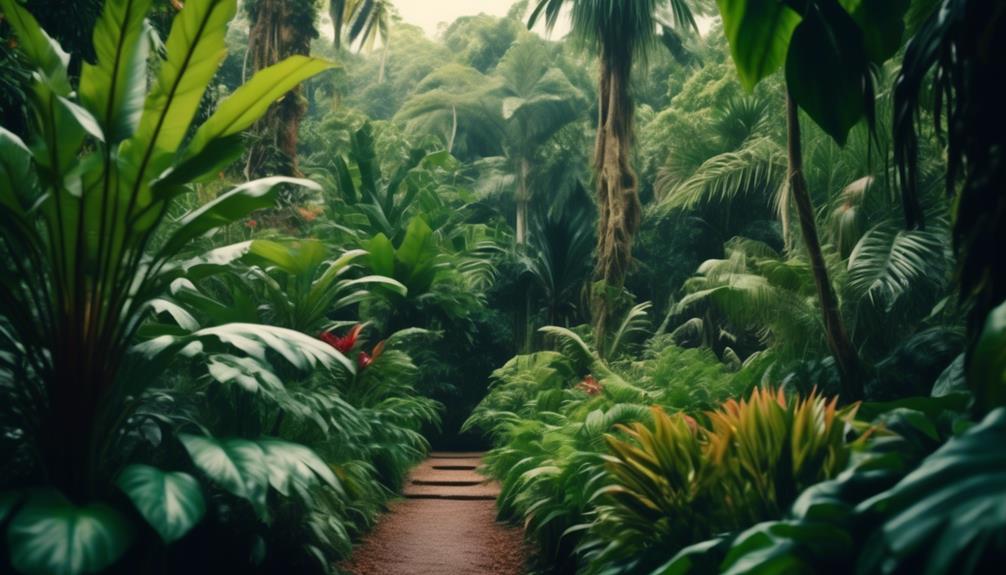

Imagine you're walking through a lush greenhouse when you suddenly come across the 'Gigante Indio,' a towering exotic plant with leaves as broad as elephant ears and a presence that commands the space.
As you gaze up at this botanical titan, you can't help but wonder about the myriad of other exotic species that thrive far from the beaten path. In the intricate world of exotic plants, each species tells a story of evolution, survival, and the delicate balance of ecosystems.
As a connoisseur of nature's lesser-known treasures, you recognize that these living wonders are not just to be admired but also understood. The significance of their existence, the challenges they face, and the efforts to preserve their legacy are stories yet to unfold before you, beckoning you to venture further into their verdant domain.
Unveiling Gigantic Flora
Within the realm of exotic plants, the Gigante Indio stands out as a true marvel, its immense size and unique features capturing the awe of any observer. This rare plant embodies the intrigue that fuels the passion of collectors and botanists alike. You're likely aware of the increasing interest in exotic plants, and the Gigante Indio is a prime example of nature's ability to astonish with its grandeur.
Seijun Nishihata's Sora Botanical Garden project showcases over 3,000 rare and local plants, carving out a new niche in the botanical industry. It's a testament to the allure of these living wonders, and perhaps you've envisioned your space transformed by such spectacular flora.
Japan's architecture community has embraced this connection with nature, integrating it into projects like Yoyogi Village and Osaki Park City. As you explore these innovative spaces, you witness first-hand how collaboration with artists and architects can promote harmony with the natural world.
China, too, has committed to flora protection with its extensive network of conservation botanical gardens. This system not only safeguards local environments but also leads to the discovery of new flora species each year. The Gigante Indio's kin, such as the Bird of Paradise and Alocasia Polly, also offer stunning beauty, each requiring precise care to thrive.
Your journey into the world of exotic plants is just beginning, and the Gigante Indio is but a gateway to this verdant and vibrant realm.
Exotic Plant Habitats
As you marvel at the splendor of plants like the Gigante Indio, it's essential to consider the exotic habitats where these botanical wonders naturally thrive. These diverse environments, from the humidity of tropical rainforests to the dry expanses of arid deserts, offer the unique conditions that rare plants need to flourish. Each habitat supports an array of species, some endemic to specific locales, which add to the richness of the ecosystem.
Temperature, rainfall, soil, and sunlight are critical in shaping these habitats—dictating which plants find a foothold in a particular region. Yet, it's not just natural factors that influence these environments. Your actions, and those of humanity at large, such as city building, farming, and forest clearing, can disrupt these natural havens, leading to loss and fragmentation of habitats. This threatens the survival of many plant species.
To see these exotic plants without traveling to far-flung regions, you might visit a Botanical Garden, a sanctuary where these species are protected and displayed. Remember, conservation efforts and sustainable practices are vital. They're what'll ensure these exotic plant habitats, and the rare plants within them, are preserved for the generations to come.
Conservation Efforts
Harnessing the power of their robust flora protection system, China's conservation botanical gardens play a crucial role in safeguarding the biodiversity that includes newly discovered species like those found in Yunnan Province. These gardens are more than just scenic havens; they're frontline defenders in the fight to protect our planet's precious green heritage.
- Key Components of China's Conservation Strategy:
- Nearly 200 conservation botanical gardens
- Protection of over 23,000 species of flora
The discovery of new plant species in Yunnan has been a boon for local biodiversity and conservation efforts. These efforts aren't just about maintaining the status quo; they're about enhancing and restoring what's been lost. Here's what you'll find happening on the ground:
- Conservation Efforts in Action:
- New transportation infrastructure improving access to remote areas
- Ecological restoration programs rejuvenating native habitats
China's approach to conservation is multifaceted, involving both cutting-edge science and public engagement. You'll see rare native plants becoming icons that captivate the public's imagination, sparking an interest in science and nature. Every plant saved is a victory for biodiversity and a testament to the effectiveness of China's environmental protection measures.
Cultivating Exotic Species
While conservation efforts ensure the survival of exotic plants like the Gigante Indio, understanding how to cultivate these species is equally important for their ongoing preservation. You've got to get the details right – the specific light, water, soil, and care requirements are critical for the success of these new exotic additions to your garden or greenhouse.
Cultivating a wide range of exotic species isn't just about the thrill of growing something unique. It's about paying attention to their origin and characteristics, ensuring they receive the specific needs that foster optimal growth. You mightn't have all the answers, but that's where collaboration with experts and horticultural consultants comes in handy. They can offer valuable insights into the do's and don'ts of exotic plant care and help you avoid common pitfalls.
Remember, when you're cultivating exotic plant species, you're not only bringing a piece of the world to your doorstep but also promoting habitat protection and biodiversity enrichment. Your careful efforts support broader conservation work.
It's crucial to consider how these living materials balance with the form and function of your space. Cultivating exotic species is a rewarding challenge that requires both passion and precision. So, roll up your sleeves and get ready to dive into the world of exotic horticulture.
Educational Programs and Tours
Dive into the world of rare flora with Sora Botanical Garden's educational programs and tours, where you'll learn directly from the expertise of Seijun Nishihata, a master in the art of gardening and landscape design. You're not just visiting a garden; you're stepping into a living classroom where over 3,000 exotic and native plants offer a lush backdrop for your education.
- Insights from a Master
- Horticultural knowledge from Seijun Nishihata
- Hands-on learning experiences
During these tours, you'll uncover the secrets of the niche botanical industry and gain an understanding of the team's profound plant experience, which is rooted in extensive exploration and study. As you wander through the verdant spaces, the programs will also underscore the critical issues of deforestation and habitat loss, showcasing large, rare imported plants that are victims of these global challenges.
- Collaborative Learning
- Interactions with artists and architects
- A fusion of art, design, and botany
Moreover, the garden's collaboration with artists and architects adds a dynamic layer to your educational journey, promoting a deeper appreciation for the intricate relationship between plants and sustainable design. Don't miss the exclusive Media Tour, which highlights the garden's role in education and conservation, bringing the magic of rare plants to a broader audience.
Frequently Asked Questions
What Is the Most Exotic Plant in the World?
You might wonder what the most exotic plant is. It's subjective, but the Corpse Flower, with its massive bloom and pungent odor, often tops the list due to its rarity and striking appearance.
What Is the Difference Between Exotic and Indigenous?
You're comparing exotic and indigenous plants. Exotic ones aren't native to your area, while indigenous have naturally adapted. Exotic plants may need extra care, but indigenous thrive in local conditions.
What Is the Most Uncommon Plant?
You're asking about rare plants; the Primula wolongensis, recently found in China, is one of the most uncommon, due to its very limited range and discovery in a single protected reserve.
Which Is the Oldest Botanical Garden in India?
You'd find the oldest botanical garden in India at Kolkata's Acharya Jagadish Chandra Bose Indian Botanic Garden, established in 1787, a lush sanctuary steeped in history and botanical marvels.
Conclusion
As you close the final pages of 'Gigante Indio,' you're not just ending a chapter on exotic plants; you're beginning a journey akin to stepping into the Garden of Eden.
Remember, each leaf and petal you've discovered is a living testament to nature's grandeur.
Let's nurture this green legacy together, ensuring these botanical wonders continue to thrive for generations.
Now, go forth—be a steward of Earth's extraordinary garden.