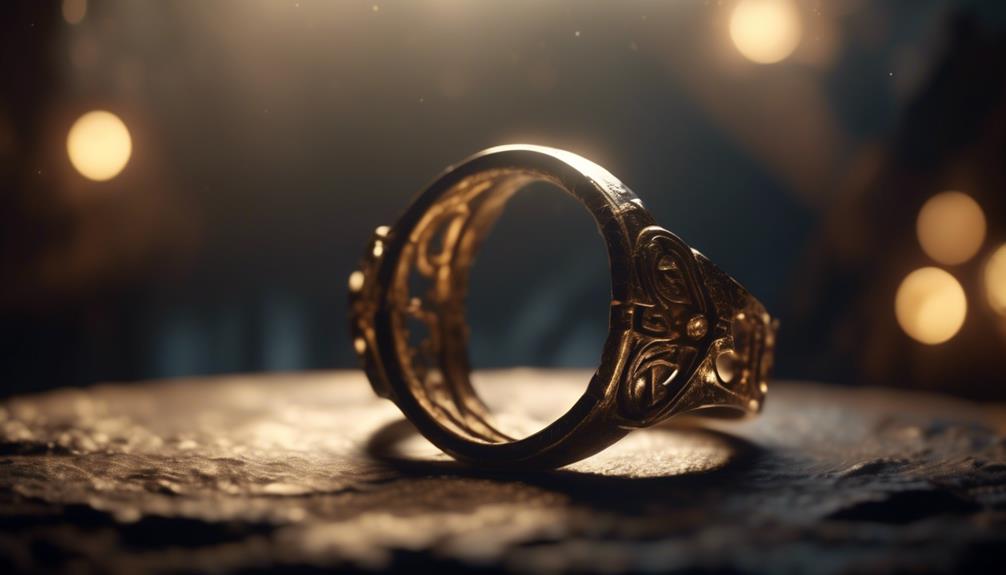

While you might initially think that a game's logo is just a small part of the overall experience, the Elden Ring logo's design subtly yet significantly enhances your gaming journey.
As a player, you're often unaware of how the intricate details of a logo can subconsciously set the stage for the adventure ahead. The Elden Ring logo, with its enigmatic runes and commanding presence, doesn't just serve as a title screen; it encapsulates the essence of the game's lore and beckons you into a world of mystery and grandeur.
It's a prime example of how thoughtful design can imprint on your memory, influencing not just your perception of the game but also the broader gaming culture. Consider how this emblem speaks to you beyond its visual appeal, as it might just hold the key to understanding the profound impact design has in the digital realms we love to explore.
The Symbolism of Elden Ring
Delving into the symbolism of Elden Ring, you'll uncover layers of meaning that deepen your connection to its enigmatic world. The game's world design isn't just a backdrop; it's a narrative device meticulously crafted by Hidetaka Miyazaki, building on the legacy of Souls games.
As you piece together the Elden Ring story, you'll realize the absence of a quest log isn't an oversight. It's a deliberate choice that thrusts you into a state of uncertainty, mirroring the game's themes of exploration and the pursuit of knowledge.
The game uses this lack of guidance to encourage intrinsic motivation. You're not just completing tasks; you're forming bonds and making memories that resonate with the struggle of Queen Marika's realm. Each space you explore is alive with progression, its inhabitants shaping the narrative and drilling a unique personality into your experience.
Design Elements Decoded
Let's unravel the design elements of Elden Ring that earned it the Game of the Year title, focusing on how its intentional choices in UI and narrative structure profoundly impact your gaming experience.
As you step into the vast open world, you're not just playing a game; you're embarking on a journey where every design choice has a purpose.
- Design Elements Decoded:
- *UI Choices*:
- The absence of a quest log invites a sense of mystery and exploration.
- Non-transactional side quests foster deeper connections with NPCs, enhancing Elden Ring's story.
- *Narrative Design*:
- Intrinsic motivation drives engagement, as you pursue quests that intrigue you personally.
- Spaces are uniquely defined by their inhabitants, making each area's personality stick with you through repetition.
These elements aren't mere aesthetic choices; they're woven into the game design. Elden Ring's open world is a canvas where new mechanics and enemy progression aren't just part of the landscape but integral to the overarching narrative.
Unlike Dark Souls, Elden Ring leans on its community for discovery and understanding, balancing solitude with a shared sense of purpose. It's a testimony to how much storytelling and player experience can be enhanced without relying solely on cinematic exposition.
Branding in Gaming Culture
As we explore Elden Ring's design mastery, it becomes clear that the game's branding plays a crucial role in its cultural impact and success within the gaming industry. The branding in gaming culture isn't just about a logo or a visual identity; it's about crafting an experience that resonates with players. When a game like Elden Ring achieves the highly-coveted title of 'Game of the Year' at prestigious game awards, it's a testament to the power of its branding strategy.
To thrive in the competitive game industry, companies must create a brand that stands out. This means consistent design across all platforms, from the game's cover art to its digital presence. It's the visual identity that often captivates you before you even play the game. But branding doesn't stop there.
Community engagement is vital. Brands connect with you through social media, events, and community building, creating a sense of belonging around a game. When a game becomes a part of your identity, it's clear that the branding has done its job.
Logo's Influence on Engagement
A captivating logo can significantly enhance your gaming experience, drawing you into the game's world before your adventure even begins. Consider the iconic emblems from the Souls series, Sekiro: Shadows Die Twice, or Demon's Souls. These logos do more than just look cool; they're gateways to the gaming world, setting the tone for the immersive experiences you're about to have.
Logos play a pivotal role in how a game tells its story and delivers its theme. Think of them as silent narrators that hint at the lore and the great combat you'll encounter. Here's how the right logo design influences your engagement:
- Visual Appeal:
- *First Impressions:* A logo is often your first encounter with a game. It can pique your interest or turn you away.
- *Brand Recognition:* A strong logo can become synonymous with quality gaming experiences, building anticipation for every release.
- Narrative and Theme:
- *Storytelling:* The logo often reflects the game's narrative, preparing you for the story you're about to unfold.
- *World-Building:* It can suggest the atmosphere of the game, whether it's the foreboding realms of Souls games or the rich historical backdrop of Sekiro.
Every time you see that emblem, it's not just a logo; it's an invitation to a world where every element, including the logo itself, is part of the great combat and adventure that awaits.
Beyond Aesthetics: Functionality
While a logo's visual appeal and narrative significance captivate your interest, it's the game's UX design that ensures your experience goes beyond mere aesthetics to functional immersion. Elden Ring's choice to omit a traditional quest log isn't an oversight; it's a deliberate design decision that encourages you to engage with the world in a more profound way.
Instead of following a list, you're nudged to explore and interact with the environment multiple times, which is a direct result of the game's emphasis on functionality.
This approach has a significant impact on how you play. You're not just ticking off objectives; you're weaving your own story through the game's rich tapestry. The functionality of Elden Ring's design—its hidden paths, unmarked secrets, and the very lack of hand-holding—transforms your experience from a guided tour to an adventure that the game gives you the freedom to craft.
It's the UX design's subtle nudge towards intrinsic motivation and discovery that deepens your connection to the game, making every decision and discovery feel more personal and rewarding.
Frequently Asked Questions
What Does the Elden Ring Logo Represent?
You're looking at the Elden Ring logo, which stands for a shattered world you must mend. It beckons you to explore, collect Great Runes, and delve into a rich, enigmatic story.
What Is Elden Ring Influenced By?
You're exploring a realm shaped by non-linear storytelling, open-world freedom, autonomous NPCs, and intrinsic motivation, where uncertainty and discovery collide amid meticulously crafted spaces and evolving enemies. Community and narrative clarity further mold your journey.
Why Is Elden Ring so Successful?
You're captivated by Elden Ring's success due to its immersive world, deep narrative, and fresh gameplay. It's redefined open-world gaming, setting new standards without relying on its logo's design to draw you in.
How Long Did It Take to Design Elden Ring?
You may be surprised to learn that Elden Ring's design took years to perfect, involving a team's dedication to create an experience that's both expansive and detailed.
How Important is Design in Video Games for a Gaming Icon’s Success?
Design plays a crucial role in a gaming icon’s success. It sets the tone for the entire gaming experience and can make or break a game’s popularity. Billy Mitchell’s net worth article reflects how strategic design choices can propel a gaming icon to success and influence their financial standing within the industry.
Conclusion
As you gaze upon the Elden Ring logo, its enigmatic lines whisper tales of grandeur and decay, drawing you into a world veiled in beauty and darkness.
It's not just a symbol but a beacon, guiding your curiosity and anticipation.
In the gaming realm, such artistry does more than dazzle—it forges connections, shapes experiences, and becomes the heartbeat of an adventure that lingers long after the screen fades to black.