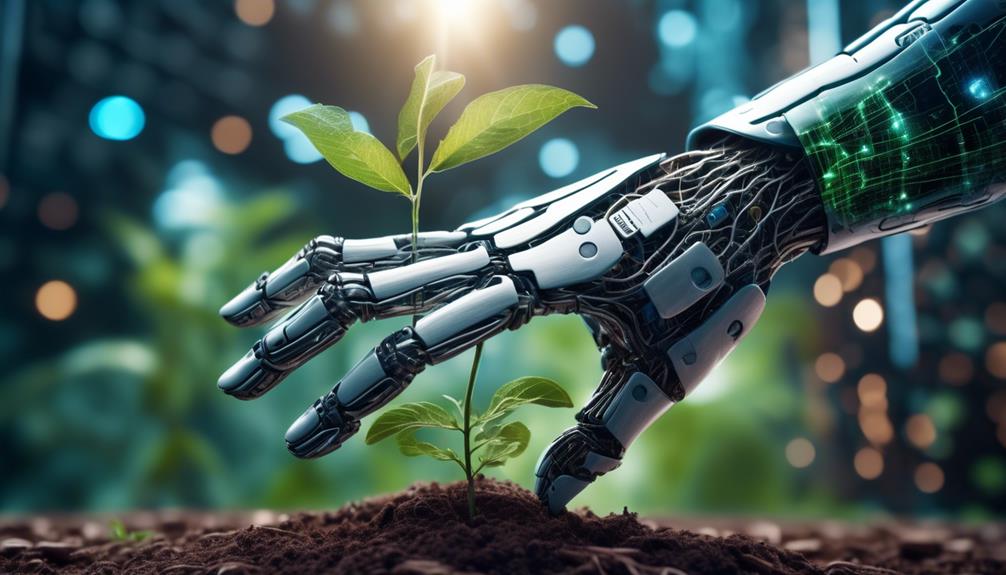

As you navigate the ever-shifting landscape of technology, consider artificial intelligence as a ship set to sail the tumultuous seas of digital evolution.
You've witnessed the rise of AI, but you're also acutely aware that, for it to truly be a cornerstone of future innovation, it must be built to last. Durable AI isn't just about crafting systems that can stand the test of time; it's about embedding resilience and adaptability deep within their code.
You understand the necessity for AI to not just learn, but to adapt—learning from new data, evolving with changing environments, and consistently providing reliable performance.
Yet, as you stand at the helm, you're left pondering how to balance the pursuit of advancement with the assurance of longevity. The answer lies in a blend of robust design, ethical foresight, and meticulous maintenance.
But how do we achieve this harmony? As you peer into the horizon, you realize the journey to sustainable, durable AI is fraught with challenges and opportunities that demand a closer look.
The Imperative of Durable AI
As the AI landscape evolves, it's become essential to build systems that aren't just smart, but also resilient and adaptable for the long haul. You're entering an era where Durable AI isn't a luxury but a necessity. This paradigm shift in AI development focuses on creating Artificial Intelligence (AI) systems that can withstand the test of time and adapt to changing circumstances.
Durable AI is about fostering trust in technology by emphasizing resilience and ensuring AI continues to provide value far into the future.
By adhering to the principles of Durable AI, you're committing to AI systems that prioritize robustness, interpretability, and continuous learning. These systems are designed to face adversarial challenges head-on and are equipped to scale as demands grow. Ethical considerations are at the forefront, ensuring that AI behaves responsibly and transparently as it becomes more embedded in daily life.
For you, the Future of AI rests on the shoulders of Resilient Artificial Intelligence. Emphasizing resilience in AI is more than an engineering challenge; it's about building a foundation for AI that's as durable as it's intelligent. It's your path to a future where AI not only thrives but does so responsibly and sustainably.
Adaptive Learning Mechanisms
Adaptive learning mechanisms are the backbone of Durable AI, ensuring that your AI systems can learn from new data and experiences to remain robust over time. These mechanisms allow your AI to adjust and refine its algorithms in the face of an ever-evolving landscape of artificial intelligence.
As Durable AI evolves within this rapidly evolving field, it's crucial that AI models aren't just trained on large datasets but also have the ability to analyze vast and varied streams of information.
Deep learning and machine learning (ML) techniques are at the heart of these adaptive learning mechanisms. They enable your AI to not only digest new data but also to apply what it's learned in a practical, real-world context. This continuous learning process is vital for maintaining the effectiveness and relevance of AI systems.
Hardware Resilience and Maintenance
To ensure your AI system remains operational and efficient, prioritizing hardware resilience and regular maintenance is crucial. Your Artificial Intelligence (AI) relies on complex algorithms and vast amounts of data to learn and develop. As the technology ages, the risk of hardware failure increases, potentially disrupting the intelligence processes of your Durable AI.
To keep your AI's learning capabilities sharp and its operations smooth, consider the following:
- Build with Resilience in Mind: Design systems to withstand evolving challenges, ensuring they maintain performance over time.
- Proactive Maintenance: Regularly monitor and maintain hardware to prevent issues from arising and address them promptly when they do.
- Incorporate Redundancy: Use failover mechanisms to provide backup and ensure that AI services continue without interruption should a component fail.
- Update and Upgrade: Stay ahead of aging technology by updating and upgrading hardware components, keeping your AI's learning capabilities cutting-edge.
Ethical Considerations for Sustainability
When building sustainable AI, you must navigate ethical considerations, such as ensuring data is handled responsibly and privacy is safeguarded. This is fundamental as the use of AI expands across various sectors. It's not just about how AI is designed, but also about how it interacts with the environment and society at large. You're facing an evolving landscape of artificial intelligence where ethical considerations for sustainability become crucial for Durable AI.
Here's a table summarizing key points:
| Ethical Pillar | Importance in Durable AI |
|---|---|
| Data Handling | Ensures responsible use and maintains user trust. |
| Privacy | Safeguards individual rights and builds trust. |
| Transparency | Allows users to understand AI decisions, fostering accountability. |
| Environmental Impact | Minimizes resource use, aligning with sustainability goals. |
Durable AI and longevity research are intertwined with the advancements in AI technology. To maintain AI applications that are beneficial in the long run, you're tasked with aligning technological growth with ethical imperatives. By doing so, you build trust and ensure that the face of evolving AI remains one that is seen as a positive force for society and the environment. Remember, the sustainability of AI is not just about its continuous function but also about its ethical footprint.
AI Longevity in Industry Applications
Building on the foundation of ethical practices, AI longevity in industry applications becomes a pivotal focus, ensuring that AI systems are resilient and adaptable for long-term use. The future with Durable AI isn't just about deploying cutting-edge technology; it's about making sure that these AI technologies continue to function effectively over time, regardless of changes in their operating environment.
Here's why AI longevity in industry applications is so crucial:
- Resilience to Evolving Environments: Durable AI is built to withstand the test of time, adapting to new data streams and evolving market demands.
- Extended Lifespan: By reducing the need for frequent retraining, Durable AI models offer a longer service life, saving resources and time.
- Seamless Integration: Durable AI is designed to integrate smoothly into existing systems, enhancing decision-making processes without disrupting operations.
- Versatility Across Sectors: From healthcare to finance, Durable AI can analyze vast amounts of data, making accurate predictions that drive efficiency in various fields.
As you delve deeper into the field of AI, remember that Durable AI isn't just a fleeting trend; it's a commitment to developing industrial applications of AI that you can rely on for years to come.
How Can Durable AI Enhance Collaboration in Tech Spaces Like TanxoHub?
Durable AI fosters seamless integration and real-time communication, paving the way for innovative solutions. In tech spaces like TanxoHub, this advancement means projects can evolve dynamically, as ideas flow freely and teams synergize effortlessly. Ultimately, the future of teamwork is clear: collaboration transformed at tanxohub spaces leads to unprecedented efficiency.
Future-Proofing AI Technology
You need to ensure your AI systems aren't just smart, but also resilient.
By focusing on adaptable algorithm development, you're equipping your AI to handle unforeseen changes and maintain relevance.
Implementing continuous learning and robustness against obsolescence is critical for AI that lasts.
Adaptable Algorithm Development
To future-proof AI technology, developers must focus on crafting adaptable algorithms that remain effective as environments and challenges evolve. Durable AI relies on this adaptability to ensure that AI aims are met despite the dynamic nature of data and applications.
Here's why adaptable algorithm development is crucial in AI: Navigating the Future:
- Ensures Long-Term Performance: Adaptable algorithms are designed to maintain efficiency over time.
- Promotes Sustainability: Flexibility in AI places a strong emphasis on resilience, supporting sustainable operations.
- Facilitates Integration: The capacity to adjust allows for smooth implementation across various sectors.
- Enhances Problem-Solving: ML algorithms used to develop adaptable AI excel at analyzing vast amounts of data to identify key trends and solutions.
Continuous Learning Implementation
While adaptable algorithms lay the groundwork for resilient AI, implementing continuous learning is key to maintaining its relevance in an ever-changing world.
The crux of continuous learning implementation is an AI's ability to assimilate new information and adapt without constant manual updates. This is essential for applications like healthcare, where AI must identify new factors that contribute to a patient's overall health.
By identifying patterns in age using robust data, AI can help develop novel, targeted interventions.
Continuous learning means AI systems stay up-to-date, reducing the need for frequent retraining and ensuring seamless integration across industries.
It's the cornerstone of AI that not only survives but thrives amidst continuous evolution.
Robustness Against Obsolescence
In the realm of artificial intelligence, ensuring robustness against obsolescence is paramount for creating systems that stand the test of time and technological shifts. As AI has emerged as a critical component in various sectors, from healthcare to finance, the need for durable AI goes beyond the initial implementation phase.
To keep you engaged, consider these crucial steps to future-proof AI technology:
- Adapt AI systems to evolving environments and technologies to maintain relevance.
- Implement long-term performance strategies that minimize the need for constant retraining.
- Focus on resilience to ensure AI remains effective across changing data landscapes.
- Reduce environmental impact through sustainable AI practices, thereby promoting longevity.
Robustness against obsolescence in AI isn't merely a goal—it's a necessity. As data becomes more complex and ML algorithms face the process of aging, systems used to identify patterns or assist in treatment planning must evolve to stay ahead.
Frequently Asked Questions
Will AI Solve Longevity?
You're asking if AI will crack the code to longevity. With its deep learning prowess, it might just unearth key anti-aging treatments, potentially revolutionizing how long you could healthily live.
What Is Resilient Ai?
You're looking at resilient AI, which focuses on creating adaptive systems that maintain performance despite changes or challenges in their operational environment. It's about long-term effectiveness and adaptability, not just longevity.
How Might AI Be Used to Address Issues Like Aging and Longevity in the Future?
You'll see AI analyze health data to predict and prevent age-related diseases, personalize treatments, and even manage your retirement funds to support a longer, healthier life in the future.
How Is AI Improving Quality of Life?
You'll find AI improving life quality by 40% in healthcare alone, offering personalized treatments and early disease detection. It's streamlining daily tasks and enhancing accessibility, making your life easier and healthier.
Conclusion
In conclusion, you've witnessed the wonders of Durable AI. Adaptive algorithms and astute applications abound, braving the bounds of hardware resilience and ethical boundaries. This builds a bedrock for AI that's not only brainy but also built to last.
As industries integrate these intelligent innovations, you're not just future-proofing technology. You're trailblazing a transformative trajectory for tomorrow's tech.
Embrace this enduring era of AI and watch as your world wondrously wields wisdom that withstands time.